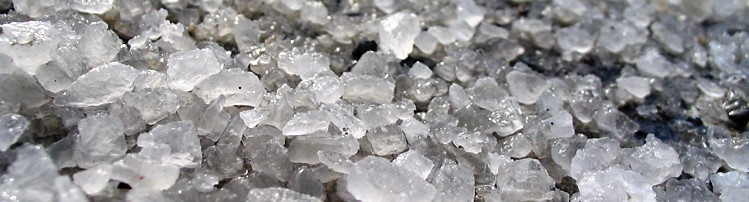
In Wisconsin, winter means snow, ice, and inevitably, salt. De-icing salt is a common sight on sidewalks, parking lots, and driveways, helping to prevent slips and falls during the coldest months. However, this winter staple comes with an environmental cost: our local rivers, lakes, and streams are suffering from the overuse of salt.
Why Is Salt a Problem?
Once salt enters the environment, it’s here to stay. Salt doesn’t break down or evaporate; instead, it washes into lakes, rivers, streams, and wetlands, where it can wreak havoc on freshwater ecosystems. Chloride from road salt is toxic to small aquatic organisms and disrupts the delicate balance of natural habitats.
Here are some alarming facts:
Just 1 teaspoon of salt can permanently pollute 5 gallons of water, reaching toxicity levels harmful to fish and other aquatic life.
For over 60 years, our soils, groundwater, and waterways have absorbed nearly all the salt spread in urban areas.
Salt contamination not only hurts the environment, but also infrastructure, our vehicles, pet paws, and our local economy.
The good news? We don’t have to choose between safety and sustainability. By using salt smarter, we can protect our waterways while keeping sidewalks and driveways ice-free.
Winter Salt Flashcards
A quick, family friendly way to learn smarter winter habits that use less salt and help protect local waters.
Tap the card to flip it.
/* Scoped styles: only affect inside #fw-salt-flashcards */
#fw-salt-flashcards.fw-salt{
--bg1:#07182b;
--bg2:#0b2a43;
--card:#0f3657;
--card2:#0b2f4d;
--ice:#d9f2ff;
--muted:#b9d6e6;
--accent:#59c7ff;
--accent2:#7cf0d6;
--border:rgba(217,242,255,0.18);
--shadow:rgba(0,0,0,0.35);
--good:#43d17a;
--bad:#ff5d6c;
font-family:"Poppins", system-ui, -apple-system, Segoe UI, Roboto, Arial, sans-serif;
color:var(--ice);
background:
radial-gradient(1200px 600px at 15% 10%, rgba(89,199,255,0.22), transparent 55%),
radial-gradient(1000px 700px at 90% 30%, rgba(124,240,214,0.16), transparent 60%),
linear-gradient(180deg, var(--bg1), var(--bg2));
padding:22px;
border-radius:18px;
border:1px solid var(--border);
box-shadow:0 16px 42px var(--shadow);
}
#fw-salt-flashcards .fw-salt__header{
display:flex; align-items:flex-start; justify-content:space-between; gap:16px;
margin-bottom:16px;
}
#fw-salt-flashcards .fw-salt__title{
font-size:clamp(22px, 2.2vw, 32px);
font-weight:700; line-height:1.15;
}
#fw-salt-flashcards .fw-salt__sub{
margin-top:8px;
color:var(--muted);
font-size:14px;
line-height:1.45;
max-width:58ch;
}
#fw-salt-flashcards .fw-salt__pill{
display:inline-flex; align-items:center; gap:10px;
padding:10px 12px;
border:1px solid var(--border);
border-radius:999px;
background:rgba(15,54,87,0.45);
color:var(--muted);
font-size:13px;
white-space:nowrap;
}
#fw-salt-flashcards .fw-salt__kbd{
display:inline-flex; align-items:center; justify-content:center;
min-width:26px; padding:2px 8px;
border-radius:8px;
border:1px solid rgba(217,242,255,0.20);
background:rgba(7,24,43,0.35);
color:var(--ice);
font-weight:700;
font-size:12px;
}
#fw-salt-flashcards .fw-salt__grid{
display:grid;
grid-template-columns: 1.2fr 0.8fr;
gap:16px;
align-items:start;
}
#fw-salt-flashcards .fw-salt__panel,
#fw-salt-flashcards .fw-salt__side{
padding:16px;
border:1px solid var(--border);
border-radius:16px;
background:rgba(15,54,87,0.26);
box-shadow:0 12px 30px var(--shadow);
}
#fw-salt-flashcards .fw-salt__stage{ perspective:1100px; }
#fw-salt-flashcards .fw-salt__card{
position:relative;
width:100%;
min-height:270px;
border-radius:16px;
transform-style:preserve-3d;
transition: transform 260ms ease;
cursor:pointer;
outline:none;
}
#fw-salt-flashcards .fw-salt__card.isFlipped{ transform: rotateY(180deg); }
#fw-salt-flashcards .fw-salt__face{
position:absolute; inset:0;
border-radius:16px;
padding:18px 18px 16px 18px;
border:1px solid var(--border);
box-shadow:0 12px 30px var(--shadow);
backface-visibility:hidden;
display:flex; flex-direction:column; justify-content:space-between; gap:12px;
}
#fw-salt-flashcards .fw-salt__front{
background:linear-gradient(180deg, rgba(89,199,255,0.10), transparent 42%),
linear-gradient(180deg, var(--card), var(--card2));
}
#fw-salt-flashcards .fw-salt__back{
background:linear-gradient(180deg, rgba(124,240,214,0.10), transparent 42%),
linear-gradient(180deg, var(--card2), var(--card));
transform: rotateY(180deg);
}
#fw-salt-flashcards .fw-salt__kicker{
display:flex; align-items:center; justify-content:space-between; gap:10px;
color:var(--muted);
font-size:12px;
text-transform:uppercase;
letter-spacing:0.3px;
}
#fw-salt-flashcards .fw-salt__badge{
display:inline-flex; align-items:center; gap:6px;
padding:6px 10px;
border-radius:999px;
border:1px solid var(--border);
background:rgba(7,24,43,0.35);
color:var(--muted);
font-weight:700;
font-size:12px;
text-transform:none;
letter-spacing:0;
}
#fw-salt-flashcards .fw-salt__q{
font-size:clamp(18px, 2.0vw, 26px);
line-height:1.25;
font-weight:700;
}
#fw-salt-flashcards .fw-salt__a{
font-size:clamp(16px, 1.7vw, 22px);
line-height:1.35;
font-weight:600;
}
#fw-salt-flashcards .fw-salt__hint{
color:var(--muted);
font-size:13px;
line-height:1.45;
}
#fw-salt-flashcards .fw-salt__controls{
display:flex;
flex-wrap:wrap;
gap:10px;
margin-top:12px;
}
#fw-salt-flashcards .fw-salt__spacer{ flex:1 1 auto; }
#fw-salt-flashcards .fw-salt__btn{
font-family:inherit;
border:none;
border-radius:12px;
padding:10px 12px;
cursor:pointer;
font-weight:700;
font-size:14px;
transition: transform 80ms ease, filter 120ms ease;
}
#fw-salt-flashcards .fw-salt__btn:active{ transform: translateY(1px); }
#fw-salt-flashcards .fw-salt__btn:disabled{ opacity:0.45; cursor:not-allowed; }
#fw-salt-flashcards .fw-salt__btnPrimary{
background:linear-gradient(90deg, rgba(89,199,255,1), rgba(124,240,214,1));
color:#062033;
}
#fw-salt-flashcards .fw-salt__btnGhost{
background:rgba(7,24,43,0.35);
border:1px solid var(--border);
color:var(--ice);
}
#fw-salt-flashcards .fw-salt__btnGood{
background:rgba(67,209,122,0.18);
border:1px solid rgba(67,209,122,0.45);
color:var(--ice);
}
#fw-salt-flashcards .fw-salt__btnBad{
background:rgba(255,93,108,0.16);
border:1px solid rgba(255,93,108,0.45);
color:var(--ice);
}
#fw-salt-flashcards .fw-salt__row{
display:flex; justify-content:space-between; gap:10px;
padding:10px 0;
border-bottom:1px solid rgba(217,242,255,0.12);
color:var(--muted);
font-size:14px;
}
#fw-salt-flashcards .fw-salt__row:last-child{ border-bottom:none; }
#fw-salt-flashcards .fw-salt__value{ color:var(--ice); font-weight:800; }
#fw-salt-flashcards .fw-salt__barOuter{
height:10px;
border-radius:999px;
background:rgba(7,24,43,0.35);
border:1px solid rgba(217,242,255,0.12);
overflow:hidden;
margin:10px 0 2px 0;
}
#fw-salt-flashcards .fw-salt__barInner{
height:100%;
width:0%;
background:linear-gradient(90deg, rgba(89,199,255,1), rgba(124,240,214,1));
transition: width 180ms ease;
}
#fw-salt-flashcards .fw-salt__small{
margin-top:10px;
color:var(--muted);
font-size:12px;
line-height:1.5;
}
#fw-salt-flashcards .fw-salt__link{
color:var(--ice);
font-weight:700;
text-decoration:underline;
}
#fw-salt-flashcards .fw-salt__toast{
margin-top:12px;
padding:10px 12px;
border-radius:12px;
border:1px solid rgba(217,242,255,0.16);
background:rgba(7,24,43,0.35);
color:var(--muted);
font-size:13px;
display:none;
}
#fw-salt-flashcards .fw-salt__toast.show{ display:block; }
@media (max-width: 860px){
#fw-salt-flashcards .fw-salt__grid{ grid-template-columns:1fr; }
#fw-salt-flashcards .fw-salt__header{ flex-direction:column; }
#fw-salt-flashcards .fw-salt__pill{ width:max-content; }
}
(function(){
const root = document.getElementById("fw-salt-flashcards");
if(!root) return;
// Prevent double-init if Avada re-renders
if(root.dataset.inited === "1") return;
root.dataset.inited = "1";
const cardsOriginal = [
{ category:"Salt Basics", q:"What is road and sidewalk salt usually made of?", a:"Mostly sodium chloride, the same kind of salt used on food. *just don't use it on food!", context:"It is not a special chemical. It is just used in bigger, rougher grains." },
{ category:"Salt Basics", q:"Why do we use salt in winter?", a:"It helps melt ice by lowering the freezing point of water.", context:"That is why a little salt can help, especially near freezing." },
{ category:"Salt Basics", q:"At what temperature does regular salt work best?", a:"Above about 15°F.", context:"Below that, salt works less and less, and you often need different tools or extra traction." },
{ category:"Salt Basics", q:"Does salt melt ice well when it is extremely cold, like 0°F?", a:"Not much.", context:"On very cold days, focus on shoveling, traction, and safe walking instead of dumping salt." },
{ category:"Smart Winter Habits", q:"What is the easiest way to use less salt?", a:"Shovel early and shovel often.", context:"Clearing snow before it packs down helps stop ice from bonding." },
{ category:"Smart Winter Habits", q:"Why does shoveling early help so much?", a:"It keeps ice from sticking to the ground.", context:"Less sticking means less scraping, less refreezing, and less salt needed later." },
{ category:"Smart Winter Habits", q:"How much salt is usually enough for one sidewalk?", a:"About one coffee mug for an entire sidewalk.", context:"Many people use way more than they need. A light scatter is usually enough." },
{ category:"Smart Winter Habits", q:"Is more salt always better?", a:"No. A little goes a long way.", context:"Extra salt often washes away and does not make sidewalks much safer." },
{ category:"Water and the Watershed", q:"After snow melts, where does the salt go?", a:"Into storm drains and then into local rivers and lakes.", context:"Many people think it gets cleaned at a treatment plant, but stormwater usually goes straight to waterways." },
{ category:"Water and the Watershed", q:"Do storm drains lead to a treatment plant?", a:"Usually no. Storm drains often flow directly to nearby water.", context:"Storm drains are designed to move rain and snowmelt away fast, not to treat it." },
{ category:"Water and the Watershed", q:"Can a water treatment plant remove salt easily?", a:"No. Salt is very hard and expensive to remove once it is in the water.", context:"That is why reducing salt at the source matters so much." },
{ category:"Water and the Watershed", q:"What do we call too much salt in water?", a:"Chloride pollution.", context:"Chloride is the part of salt that builds up in lakes and streams." },
{ category:"Nature and Community Impact", q:"Why can too much salt be a problem for fish and water bugs?", a:"It can make the water harder for them to live in.", context:"Healthy bugs and fish are part of a healthy watershed." },
{ category:"Nature and Community Impact", q:"Does winter salt only affect winter?", a:"No. Salt can stay in the water year round.", context:"Chloride can build up over time, especially in lakes and groundwater." },
{ category:"Nature and Community Impact", q:"Can salty water affect drinking water systems?", a:"Yes. It can raise costs and create equipment problems.", context:"Less salt can help communities avoid expensive fixes later." },
{ category:"Nature and Community Impact", q:"What is one small winter choice that helps protect local water?", a:"Use less salt by shoveling early, then using only what you need.", context:"Safer walking and cleaner water can both be true at the same time." }
];
let cards = cardsOriginal.slice();
let index = 0;
let isFlipped = false;
let knew = 0;
let learning = 0;
let isShuffled = false;
const elCard = root.querySelector(".fw-salt__card");
const elQ = root.querySelector("[data-q]");
const elA = root.querySelector("[data-a]");
const elCtx = root.querySelector("[data-context]");
const elCatFront = root.querySelector("[data-cat-front]");
const elCatBack = root.querySelector("[data-cat-back]");
const elIdx = root.querySelector("[data-idx]");
const elTotal = root.querySelector("[data-total]");
const elProgress = root.querySelector("[data-progress]");
const elBar = root.querySelector("[data-bar]");
const elScoreKnew = root.querySelector("[data-score-knew]");
const elScoreLearning = root.querySelector("[data-score-learning]");
const elMode = root.querySelector("[data-mode]");
const elToast = root.querySelector("[data-toast]");
const btnPrev = root.querySelector("[data-prev]");
const btnNext = root.querySelector("[data-next]");
const btnFlip = root.querySelector("[data-flip]");
const btnShuffle = root.querySelector("[data-shuffle]");
const btnReset = root.querySelector("[data-reset]");
const btnKnew = root.querySelector("[data-knew]");
const btnLearning = root.querySelector("[data-learning]");
function showToast(msg){
elToast.textContent = msg;
elToast.classList.add("show");
clearTimeout(showToast._t);
showToast._t = setTimeout(() => elToast.classList.remove("show"), 1600);
}
function setFlip(state){
isFlipped = state;
elCard.classList.toggle("isFlipped", isFlipped);
}
function updateControls(){
btnPrev.disabled = index === 0;
btnNext.disabled = index === cards.length - 1;
}
function render(){
const card = cards[index];
elQ.textContent = card.q;
elA.textContent = card.a;
elCtx.textContent = card.context || "";
elCatFront.textContent = card.category;
elCatBack.textContent = card.category;
elIdx.textContent = String(index + 1);
elTotal.textContent = String(cards.length);
elProgress.textContent = `${index + 1} / ${cards.length}`;
const pct = ((index + 1) / cards.length) * 100;
elBar.style.width = pct + "%";
elScoreKnew.textContent = String(knew);
elScoreLearning.textContent = String(learning);
elMode.textContent = isShuffled ? "Shuffled" : "In order";
updateControls();
setFlip(false);
}
function next(){ if(index 0){ index--; render(); } }
function flip(){ setFlip(!isFlipped); }
function shuffleArray(arr){
for(let i = arr.length - 1; i > 0; i--){
const j = Math.floor(Math.random() * (i + 1));
[arr[i], arr[j]] = [arr[j], arr[i]];
}
}
function shuffleDeck(){
cards = cardsOriginal.slice();
shuffleArray(cards);
index = 0;
isShuffled = true;
render();
showToast("Shuffled the deck.");
}
function resetAll(){
cards = cardsOriginal.slice();
index = 0;
isShuffled = false;
knew = 0;
learning = 0;
render();
showToast("Reset to the start.");
}
function markKnew(){ knew++; render(); showToast("Nice. Logged as knew it."); }
function markLearning(){ learning++; render(); showToast("All good. Logged as learning."); }
elCard.addEventListener("click", flip);
elCard.addEventListener("keydown", (e) => {
if(e.key === "Enter"){ e.preventDefault(); flip(); }
});
btnFlip.addEventListener("click", flip);
btnNext.addEventListener("click", next);
btnPrev.addEventListener("click", prev);
btnShuffle.addEventListener("click", shuffleDeck);
btnReset.addEventListener("click", resetAll);
btnKnew.addEventListener("click", markKnew);
btnLearning.addEventListener("click", markLearning);
// Keyboard shortcuts (scoped)
document.addEventListener("keydown", (e) => {
if(!root.isConnected) return;
const tag = (document.activeElement && document.activeElement.tagName) ? document.activeElement.tagName.toLowerCase() : "";
if(tag === "input" || tag === "textarea" || tag === "select") return;
if(e.code === "Space"){ e.preventDefault(); flip(); }
if(e.key === "ArrowRight"){ next(); }
if(e.key === "ArrowLeft"){ prev(); }
});
render();
})();
4 Simple Ways to Use Less Salt This Winter
Shovel Early and Often
Shovel Early and Often
Clearing snow while it’s fresh is the easiest way to reduce the need for salt. Stay ahead of the game by shoveling before snow has a chance to compact into ice. Learn more
Use Salt Sparingly
Use Salt Sparingly
A little salt goes a long way! Did you know a coffee mug of salt is enough to treat a 20-foot driveway or 10 sidewalk squares? Over-salting doesn’t speed up melting—it just increases runoff. Learn more
Know When Salt Stops Working
Know When Salt Stops Working
Salt loses effectiveness when pavement temperatures drop below 15°F. In colder weather, opt for alternatives like sand for traction or specialty de-icers designed for lower temperatures. Learn more
Sweep Up Excess Salt
Sweep Up Excess Salt
After salt has melted the ice, grab a broom. Sweeping up leftover salt prevents it from washing into storm drains and polluting waterways. Bonus: you can save and reuse it during the next snowfall! Learn more
A Win for Safety and the Environment
By rethinking how we use salt, we can help protect Wisconsin’s precious water resources without compromising safety. Small actions add up—whether it’s shoveling sooner, using less salt, or sweeping it up, every step you take helps keep our rivers and lakes healthy for generations to come.
For more tips to reduce water pollution at home, visit Renew Our Waters.