
The Perfect Landscape
You can create a beautiful outdoor space and protect our waters
A gorgeous home landscape does not need to come at the price of clean lakes, rivers, and streams. We can have both. To make it happen, we all need to think a little differently.
Fewer hard surfaces
The more concrete and blacktop your property has, the more water runs off it and into storm drains and ditches. In a natural area, far more rainwater soaks into the ground than in a developed one. Runoff from developed areas also carries oil, grease, fertilizer, bacteria, exhaust particles, and more.
Think about how much runoff your roofs, pavement, and sidewalks create, and lean on natural plantings to slow water down and let it filter into the ground. Where you need a hard surface, use pavers or bricks that let water soak through. Less runoff means less damage to your property and to others downstream, and it can save you money if your city has a stormwater utility, since those fees are based on how much runoff your property sends into the storm sewer system.
Rain gardens
A rain garden is a shallow depression in your yard that collects the rainwater running off your roof and downspouts. It captures that water before it picks up oil, grease, fertilizer, pet waste, and other contaminants, then lets it soak in to replenish groundwater instead of sending it to the storm sewer. Rain gardens are usually planted with native plants that love moisture but can also handle a dry spell.
Rain barrels
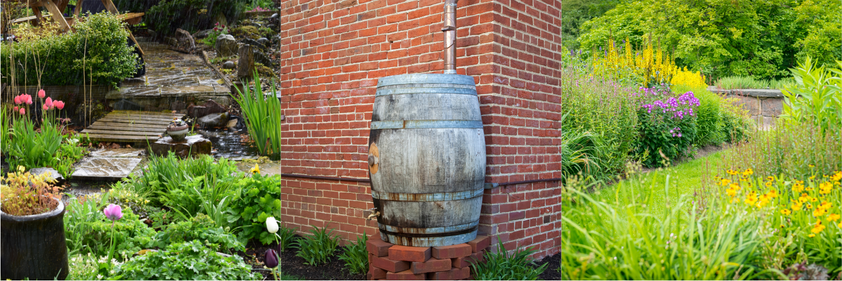
A rain barrel captures the water that flows off your roof through your downspouts. Most are 55-gallon drums built specifically to store water without becoming a mosquito breeding ground. A tight fitting lid, a seal at the downspout, and a filtered overflow valve keep the water clean and direct any excess safely away from the barrel.
Northeast Wisconsin Stormwater Consortium (NEWSC) P.O. Box 1861 Appleton, WI 54912 l 920.851.4336
