An update on the Village of Wrightstown Plum Creek Project!
Background
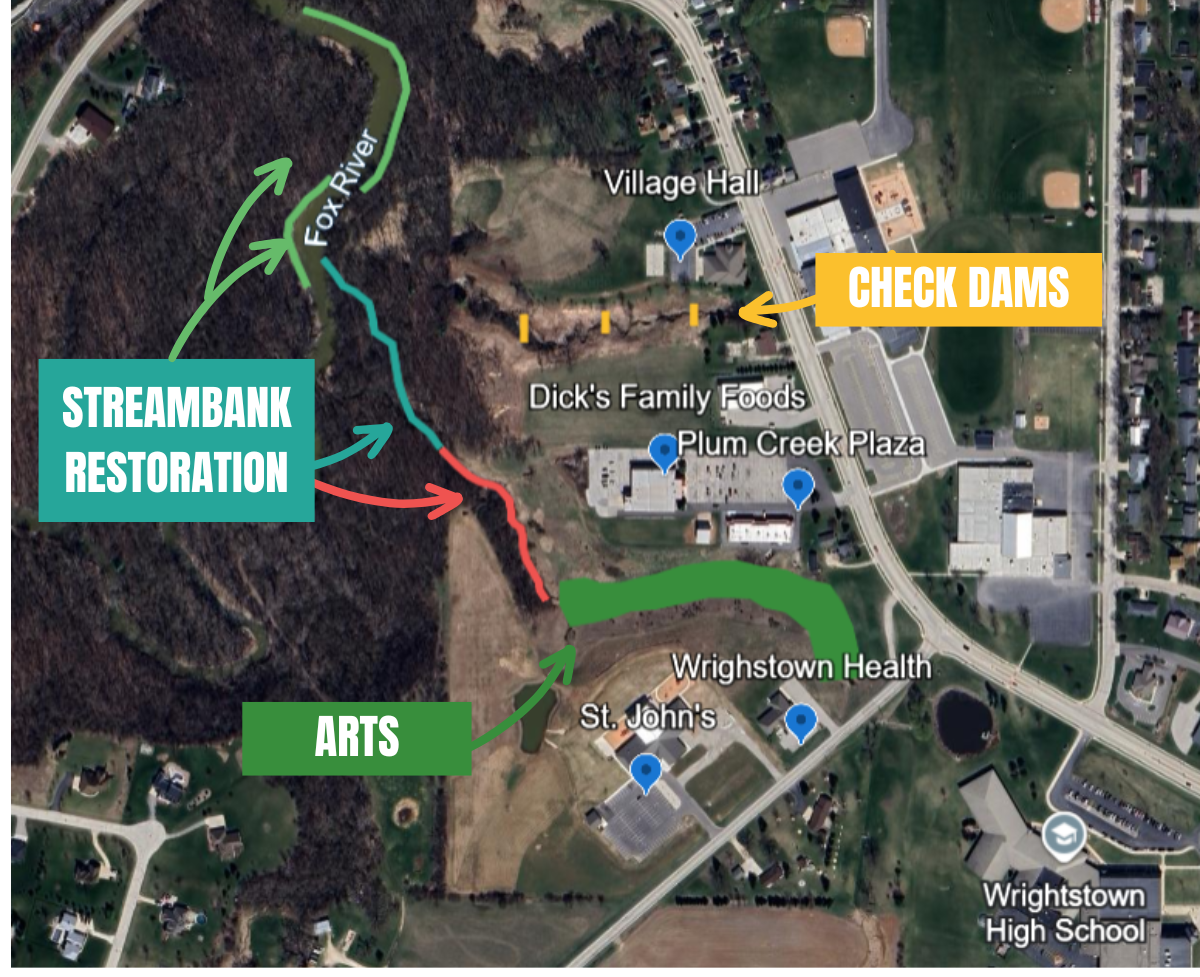
In 2021, Fox-Wolf was awarded a grant from Great Lakes Restoration Initiative (GLRI) to install water storage and streambank restoration practices at and near Plum Creek. This project leverages $600,000 in GLRI funding and $200,00 from the Village of Wrightstown to slow and detain water runoff from upland agricultural fields and restores portions of the tributary stream leading to and a portion of the Plum Creek.
The Village of Wrightstown will be installing an agricultural runoff treatment system, or ARTS for short, (learn more about ARTS here) to capture the runoff from agricultural fields just on the outskirts of residential development, and Outagamie County will design and install check dams to continue to control and slow the water as it flows to Plum Creek. Streambank restoration techniques will be employed in Plum Creek near the mouth of the Fox River and its adjacent tributary to return the section of Plum Creek to it’s natural width and restore healthy streambank conditions.
Update: Streambank Restoration Phase 1
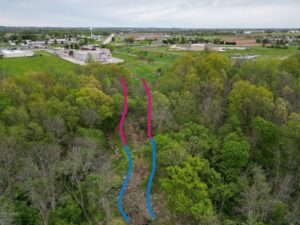
Area of streambank restoration
In the winter of 2025, streambank restoration of the areas marked in pink and blue in the project map began. Near stream trees were cleared to provide access, remove undesirable undergrowth, and prepare the streambank protection downstream of the Agricultural Runoff Treatment System. Trees were selectively cleared and larger trees were stockpiled for rootwad construction and the understory was ground up using a Fecon mulching unit. These units grind up the smaller trees into a mulch that can be spread back over the project site at the end of construction to temporarily prevent erosion while vegetation establishes.
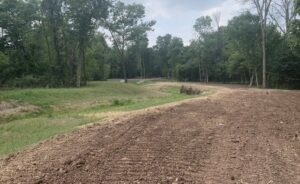
Streambank mid-construction
In the spring of 2025, construction began on the streambank restoration. The streambanks were all re-shaped at a 3:1 or flatter slope to help with prevention of future erosion. Floodplain benches were created in several locations in order to allow high flows to spread out and move more slowly through the corridor. This design allows for water to have sufficient space to fill and drain without concentrating and creating gullies. On four outside bends of the stream length, tree rootwads were installed. These rootwads, a bundle of tree roots that were harvested during tree clearing, prevent future erosion and are a more natural and environmentally friendly alternative to installing traditional rock riprap. Seeding for the entire site was completed after final construction. A native seeding will promote a combination of forbes, wildflowers, and deep rooting grasses.
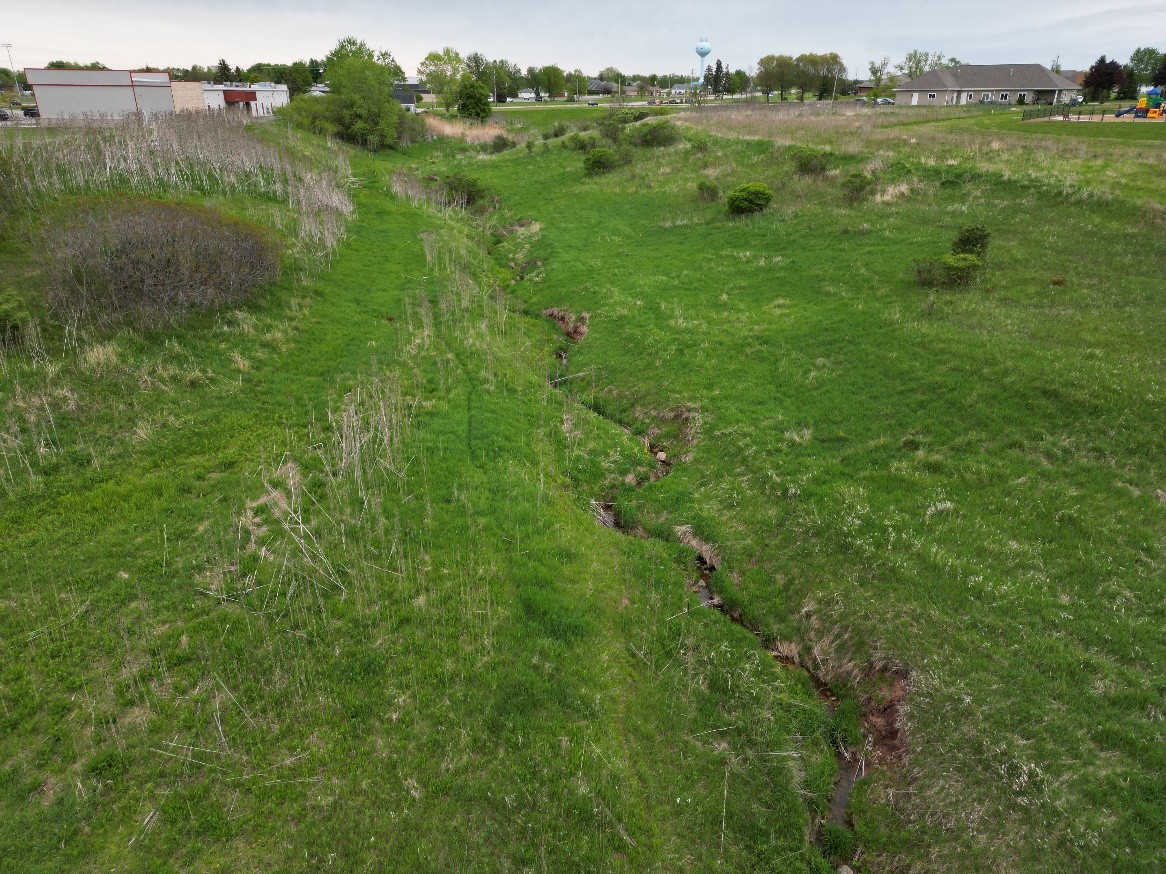
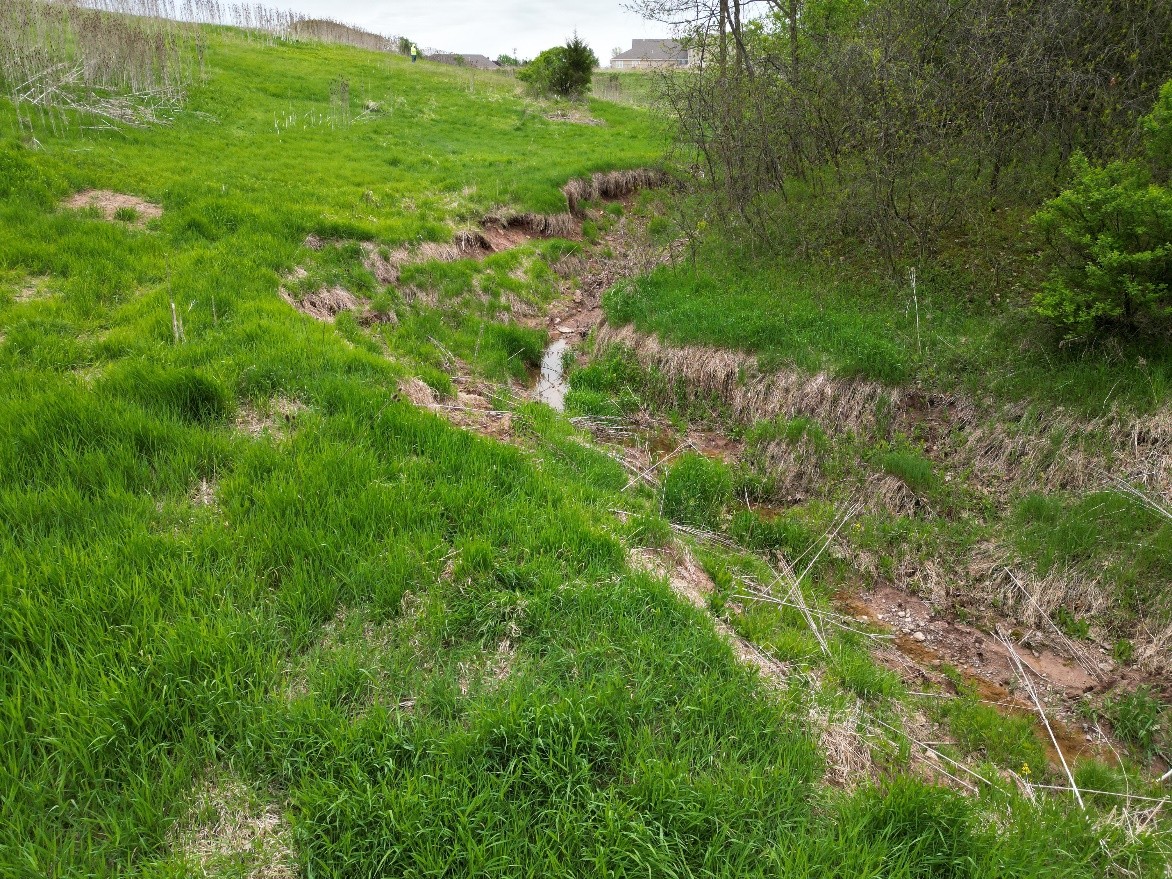
BEFORE
These images show what the site looked like prior to construction. The gullies shown is between 5-10’ deep in certain sections and were created over time as water eroded the soil. Without a path to follow, snow runoff and rain concentrated surface runoff that was powerful enough to carve and deepen channels in the soil. Portions of the snowmobile trail, heavily used in winter months, ran along the gullies, shifting the path from year to year and creating unsafe conditions for both snowmobiles and people walking the property.
AFTER
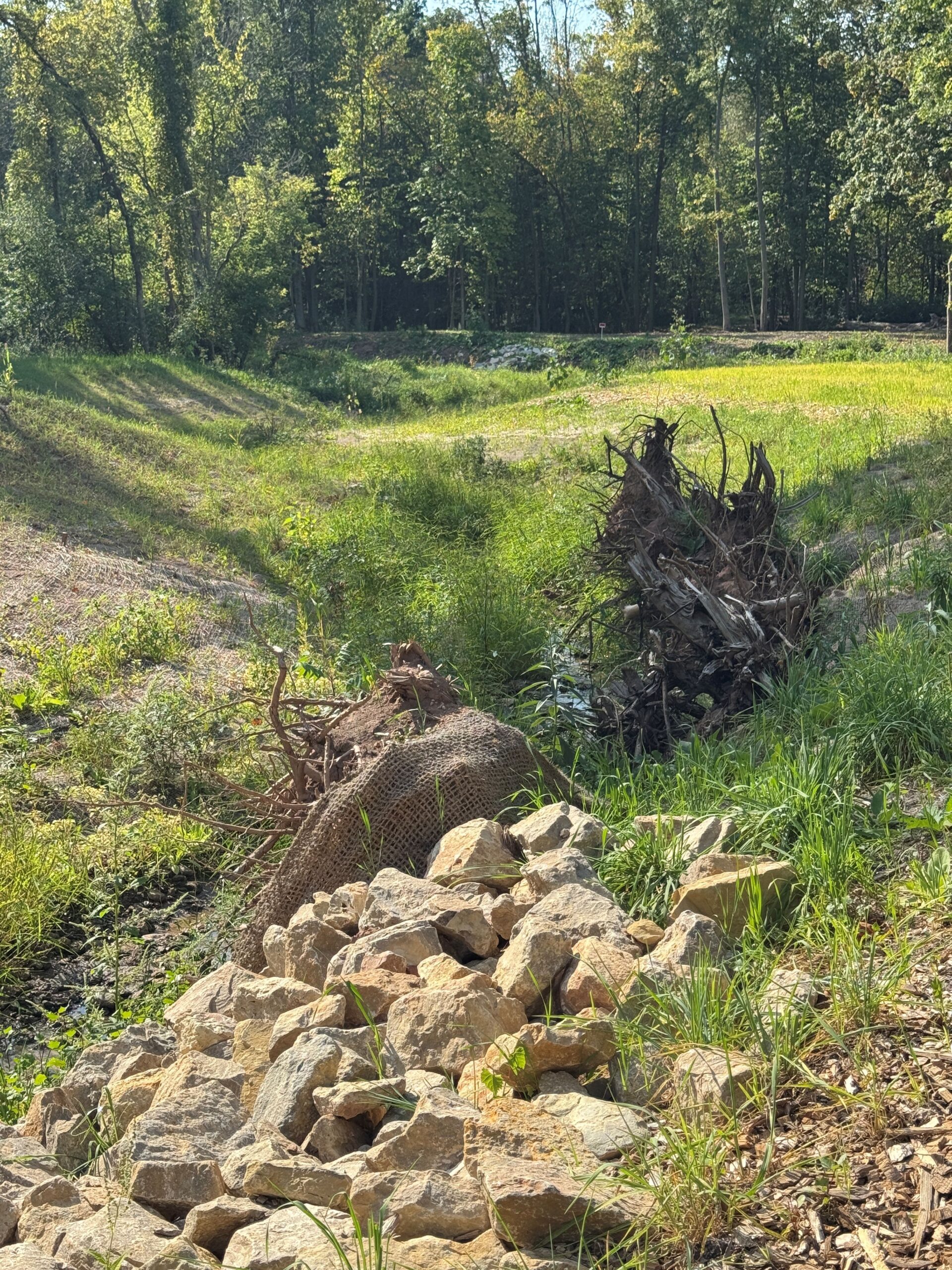
These images show what the site looked like post-construction. The once deep gullies have been flattened and the area has been regraded to allow for large runoff and rain events to overflow and soak into the ground rather than cutting into the soil. Root wads are well established in the channel, providing structure and holding vulnerable soil in place. Vegetation is beginning to return to the disturbed soil and will continue to fill in.

Keepers of the Fox is a program of the Fox-Wolf Watershed Alliance that works cooperatively to protect, sustain, and restore the water resources of the Lower Fox River watershed. For more information, contact Katie Woodrow, Lower Fox River Watershed Program Director at Katie@fwwa.org or 920.915.5767