
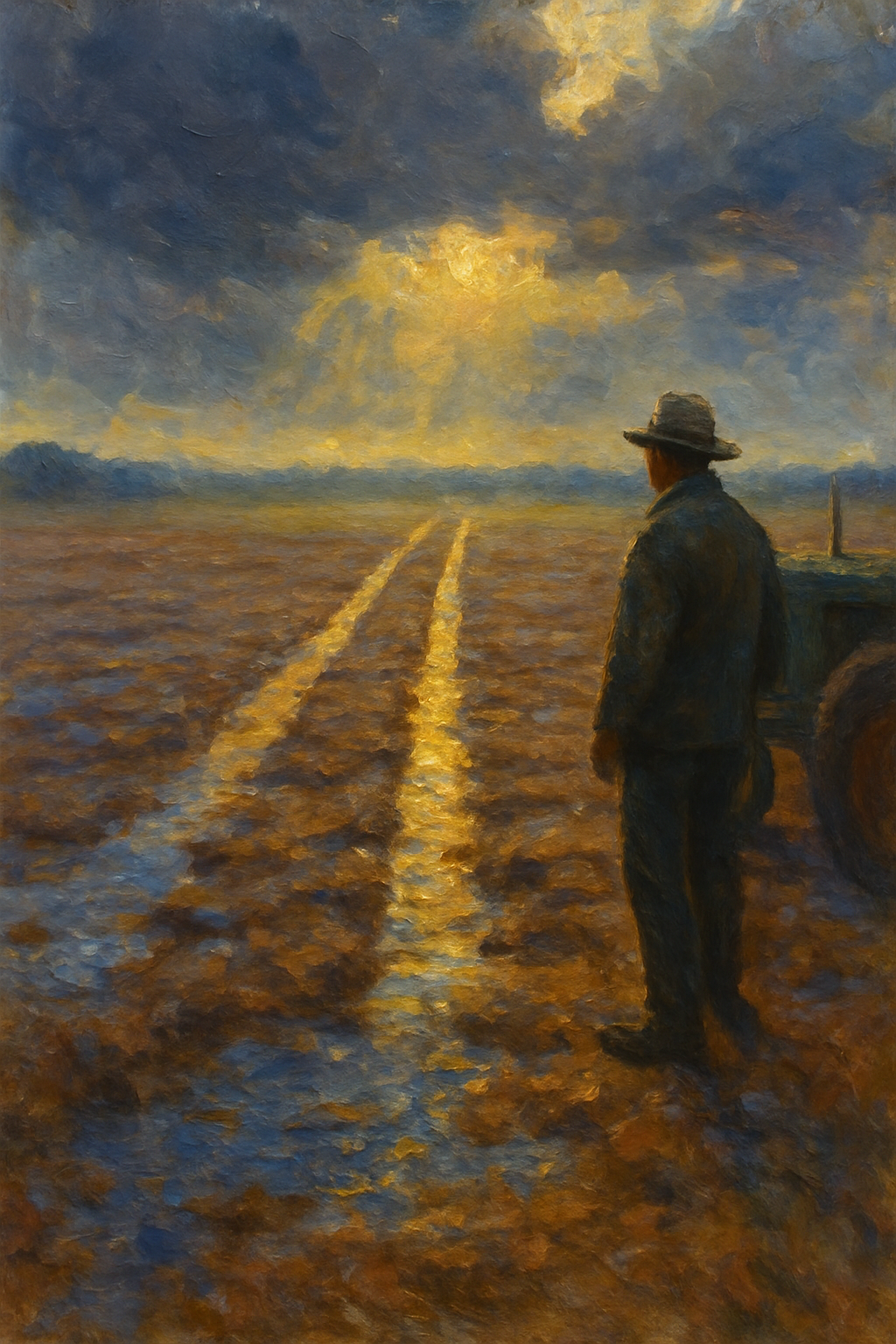
The tractor sank into the soaked red clay, its tires spinning for grip. Bruce Peterson eased forward, the machine losing momentum until it rolled onto two narrow strips of ground. There, the tires moved easily over firm, dry soil—the only solid footing in the whole field.
A week earlier, seven inches of rain had pounded his family’s farm on the east shore of Lake Winnebago. Everywhere else was waterlogged, why not those two strips? They had been worked differently. Instead of plowing, Bruce and his father had run a “chisel,” a tool that loosens soil without turning it over.
“That’s when I knew,” Bruce says. “Breaking up that hard layer underneath let the water soak in instead of running off. Those two passes were the only ground that could take the rain.”
Little did he know, that day in the late ‘70s was his watershed moment—the instant he realized changing the way you treat the soil changes the way water moves across the land.
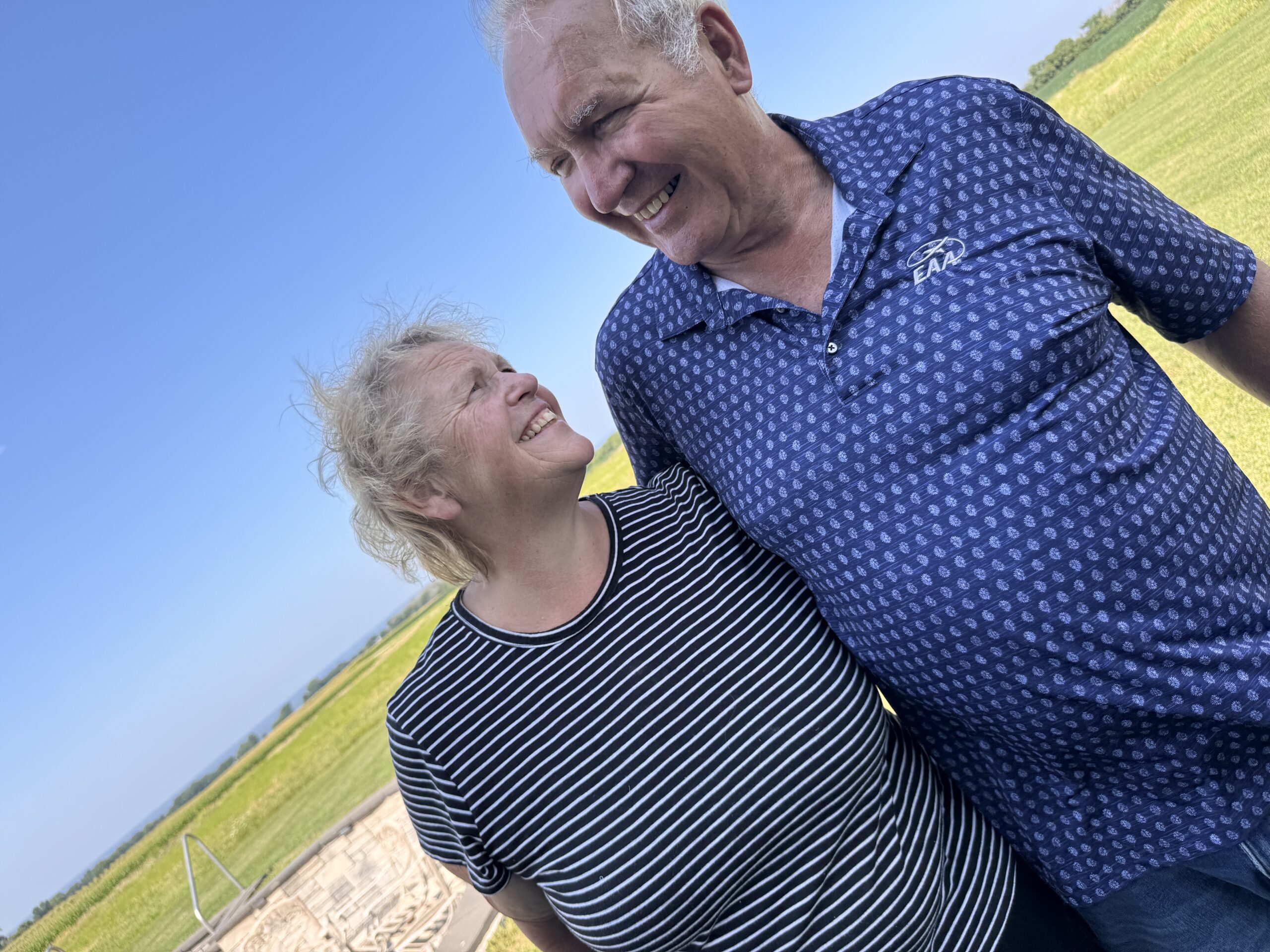
Bruce has been farming most of his 71 years. His family’s land, nestled between the rocky ridge of the Niagara Escarpment and the open water of Winnebago, has been in the family for a century and a half. It’s a place where, on a quiet summer night, you can’t help but notice the sweet scent of lavender mingling with cut hay and the cool breath of the lake.
For decades, plowing every fall was the standard practice. But after that rainstorm, Bruce began to shift toward methods that keep soil in place and protect the water. Today, he plants without tilling, a method known as “no-till,” and grows cover crops like rye or radish that hold the soil between harvests, feed soil life, and slow erosion. It’s part of a growing effort among farmers adopting soil health practices that help protect our waters—an effort steadily reshaping how the land meets our waters.
“I used to pick 50 wagonloads of stones a year.”
For Bruce, the results are visible. The topsoil is darker, richer, healthier. He spends less on fuel, puts fewer hours on the tractor, and no longer spends his days picking stones from his fields.
“I used to pick 50 wagonloads a year,” he says with a grin. “Now, if I pick two or three, I’m doing good.”
From his land, Bruce can see Lake Winnebago—a constant reminder of where the water goes. The lake faces big challenges: harmful algae, murky runoff, and nutrient overload from too many sources. As town chairman during a major aquatic weed outbreak in 2009, he saw how quickly tensions could rise.
“Everybody needs to be part of the solution.”
Everybody wanted an instant fix,” he says. “But it’s too big of a system for that. Everybody needs to be part of the solution.”
That belief led him to help launch a farmer-led watershed group in Fond du Lac. Soon, his own land will host a large water retention project in partnership with the Fox-Wolf Watershed Alliance. Its purpose? Slow runoff, let soil and nutrients settle out, and release cleaner water toward the lake.
“No matter what, water’s going to want to get there.”
And that lavender on the breeze? It is part of a new chapter Bruce is adding to the farm: over a thousand plants that thrive in dry conditions. For Bruce, they are simply the next step in a lifetime of adapting the farm while holding true to what matters most.
“No matter what,” he says, looking toward the lake, “water’s going to want to get there. The question is, how clean can we make it before it does?”
Watershed Moments is a quarterly publication from the Fox-Wolf Watershed Alliance, sharing true stories of people whose lives have been shaped by water—and the moments that sparked their care for it.
Read more Watershed Moments, or support this work with a donation.