With the 2025 migratory season underway in Wisconsin, waterfowl hunters have the perfect opportunity to achieve one of the most important habitat conservation efforts possible while out in the field – to prevent the spread of aquatic invasive species (AIS). AIS put the health of Wisconsin’s waterbodies at risk. A few minutes of prevention will stop their spread, protect quality waterfowl habitats and food sources, maintain waterfowl populations, and preserve the hunting traditions that have lasted for generations.
Cold, gloomy days of trudging through water and muck to chase ducks comes with the territory and adds to the adventure. However, after a long day in the field, hunters are faced with a boat load of grimy gear: waders, clothing, decoys, decoy bags, ropes, anchors, push poles, paddles, canoes, kayaks, boats, trailers, carts, 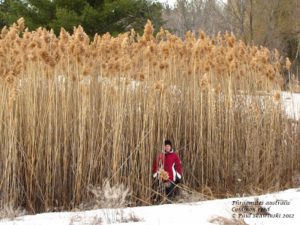 ATV/UTV’s and other hunting equipment. Hunters know they’ve got to clean that gear. Clean off any mud, plants, seeds, etc. Drain any water from the duck decoys.
But what about before you even start hunting? You’re setting up your blind and see a lot of good material to help disguise your set up. But just like you know the rules for shooting hours, ensure you know the rules for what plant material you can use for your blind. And Fox-Wolf is here to help!
Familiar to many in northeast Wisconsin, the non-native Phragmites australis is a tall grass famous for making hunting spots disappear. Also known as common reed, Phragmites grows to 18 feet tall with still hallow stems that look like canes and prominent plume-like seed heads. It spreads by below-ground rhizomes, above-ground stolons, and seed dispersal. Once established, it aggressively invades exposed lake beds, shorelines, marshes, streams, swamps, rivers, roadside ditches, heavily disturbed sites and other low, wet areas. The dense colonies limit access to hunting areas, can eliminate plant diversity, food sources, nesting habitat, and reduce stop over locations for migratory birds.

Phragmites Classification Status 2025
Phragmites australis is so aggressive that it will inevitably dominate entire habitats, hence it is an NR40 Regulated Invasive Species in Wisconsin. Under the NR40 rule, australis is classified as a Prohibited Species in the western half of the state and a Restricted Species in the eastern half of the state (check out the picture to the right; red counties are prohibited to use Phragmites and yellow counties are Restricted). It is illegal to use in Prohibited counties. In counties where it is restricted, never use the roots, seed heads, or any living part of the plant. Better yet, consider using other plant species or artificial blind material.
For any plant material you use, the best thing you can do is remove seed heads and roots from any vegetation you use. Even if you’re unsure of the species of the plant, be sure to remove seed heads and roots. Cattails, bullheads, rushes, sedges; just cut off the seed heads and roots before using it for your blind.
Help protect those places you love this fall and good hunting!
Photo Credit: Chris Acy, Chris Hamerla, WI DNR
Questions? Comments? Contact Chris Acy, the AIS Coordinator covering Brown, Outagamie, Fond du Lac, Calumet, and Winnebago Counties at (920) 460-3674 or chris@fwwa.org!
Follow the Fox Wolf Watershed Alliance on our Fox-Wolf Watershed Alliance Facebook page or @fox_wolf_watershed_alliance on Instagram! You can also sign-up for email updates at fwwa.org.
The Fox-Wolf Watershed Alliance is an independent nonprofit organization that identifies and advocates effective policies and actions that protect, restore, and sustain water resources in the Fox-Wolf River Basin.
Reporting invasive species is a first step in containing their spread. Maintaining and restoring our waters and landscapes can reduce the impacts even when we don’t have other management options to an invasive species.
Here
