
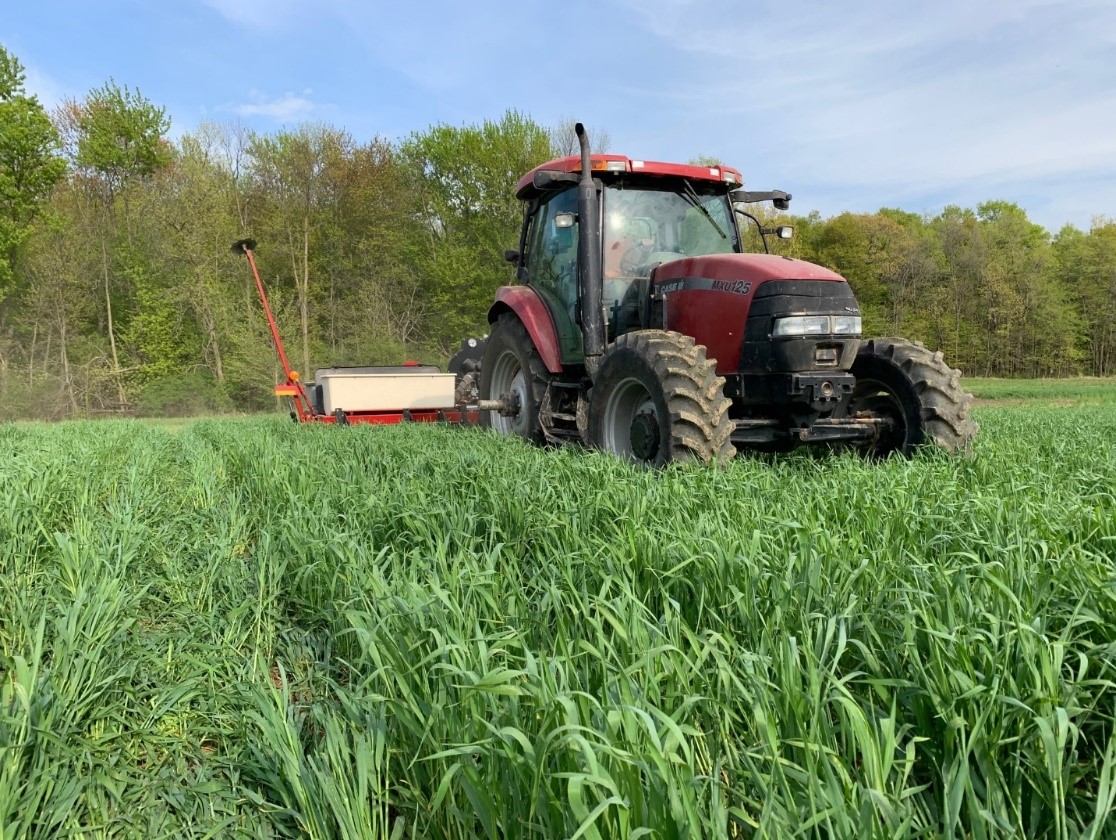
Soil is more than just dirt under our feet; it’s the foundation of our food, communities, and perhaps surprisingly, cleaner water. At Fox-Wolf, we know how important properly managed soil is for improved water quality, and farmers across the Basin know how important healthy soil is for growing good crops. Together, we’re working to make our soils healthier and water cleaner!
Soil and Water Quality – The Good and the Bad
You may be asking yourself, “How can soil make water cleaner when sediment is one of the top pollutants in our Basin?” Well, I’m glad you asked!
Here’s a little background: Soil can be a double-edged sword. When it’s left bare and/or disturbed (like after plowing), soil becomes increasingly vulnerable to erosion. Rain and snow melt wash soil away, off of fields, and into the nearest lake or stream. When soil is picked up in runoff water it becomes sediment, one of the top water pollutants in our Basin. That runoff and sediment carry nutrients like phosphorus. Phosphorus is essential for growing plants on land, and also in water. This makes phosphorus a fuel for harmful algal blooms (HABs). These algal blooms can make water unsafe for wildlife and humans, while also having the potential to create dead zones where fish cannot survive.
If soil is a pollutant, how can it also be a part of the solution?
The problem comes down to how we manage the soil. In nature, soil is rarely left bare. Think of a forest – the ground is almost always covered by living plants or plant residues like leaves. Those plants and residues protect and soil from erosion. This cover protects soil from wind, rain, and snowmelt. But with traditional farming practices, soil is left bare and uncovered for almost 2/3 of the year. Farmers also traditionally till in fall after harvest and again in spring. Together, this makes soil vulnerable to erosion and prone to washing away. Farmers don’t want to lose their topsoil and the valuable nutrients that soil holds. That’s where soil health practices come in.
Farmers are adopting soil health practices that both improve their land and protect our water. These practices can include cover crops, no or strip-till, managed grazing, low-disturbance manure, and many more. Together, these practices work to create a Continuous Cover system, keeping the soil protected, undisturbed, and covered all year long.
Farming for Clean Water
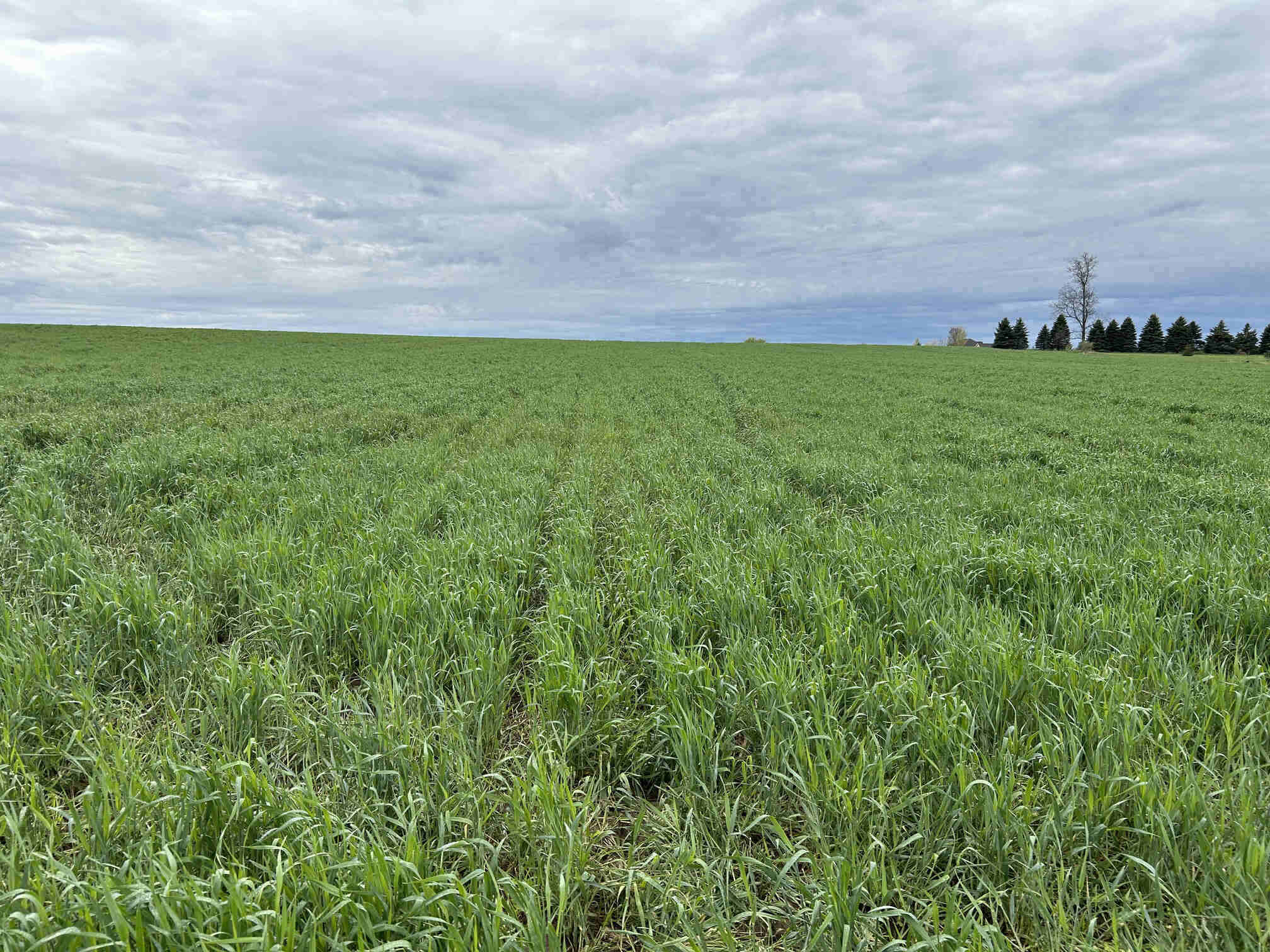
By keeping the soil undisturbed (un-tilled or tilled minimally) and covered in the off-season, these soil health practices greatly reduce the amount of sediment and phosphorus heading to our waterways. For farmers, healthy soils are more resilient to the effects of flooding and drought, make for stronger crops, hold onto more nutrients, can reduce input costs like fertilizer and fuel, make fields easier to work in, and keep soil in the field where it belongs – all while working to improve water quality. We’re working together to protect some our most vital natural resources – soil and water. When we protect soil, we protect water.
Watch the video to learn a little more about three soil health practices, cover crops, no-till, and LDMA!
