

Every fall, rain plus leaf piles can turn our streets into accidental teapots. Add water to leaves and you get a dark brew. When that wash heads into storm drains, it goes straight to our local waters where it can help fuel algae. The fix is easy and it starts in the yard.
60-second backyard experiment:
Making A Phosphorus Tea Homebrew
1. Fill a clear jar with water.
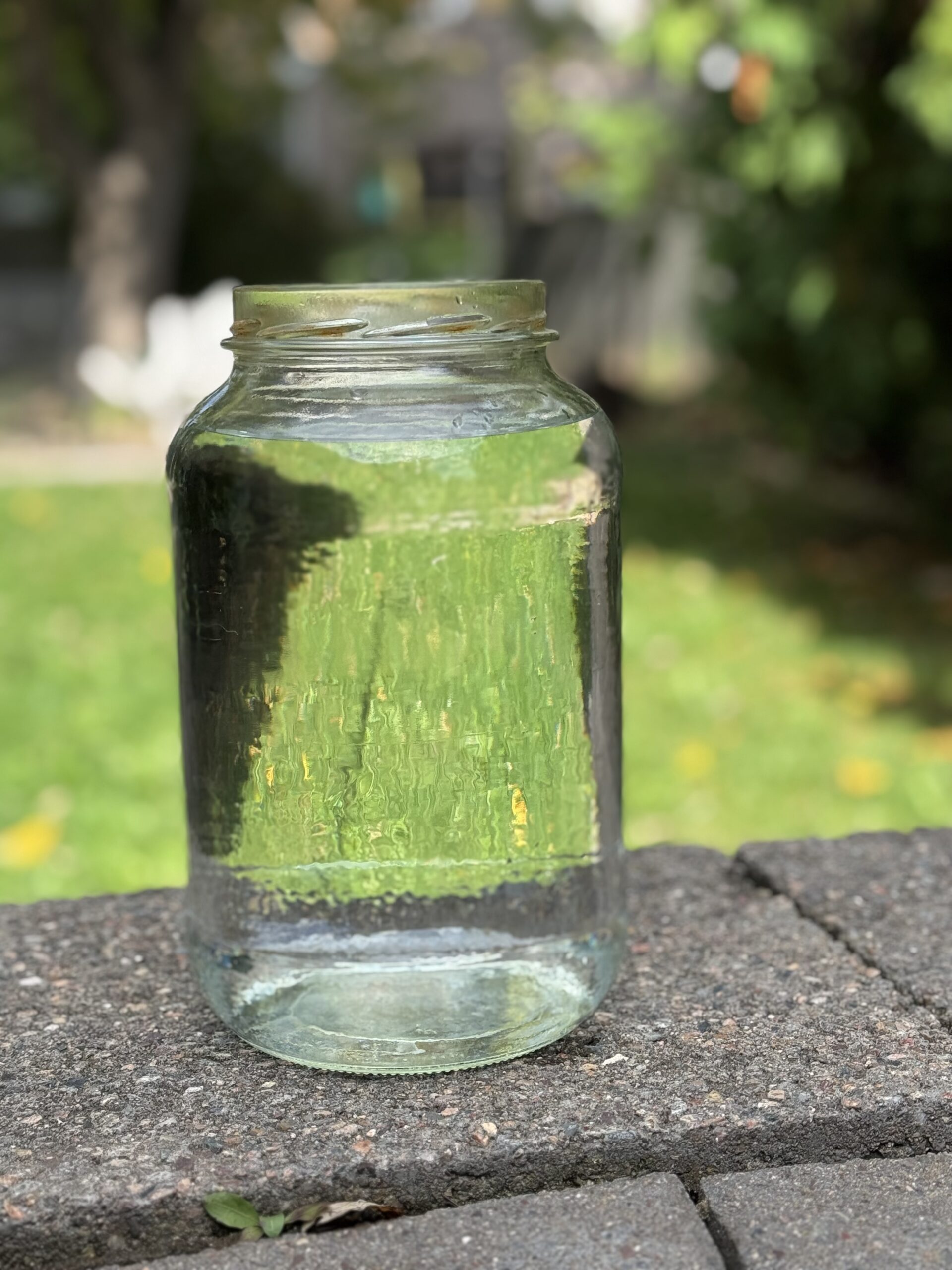
2. Add dry leaves and give it a gentle shake.
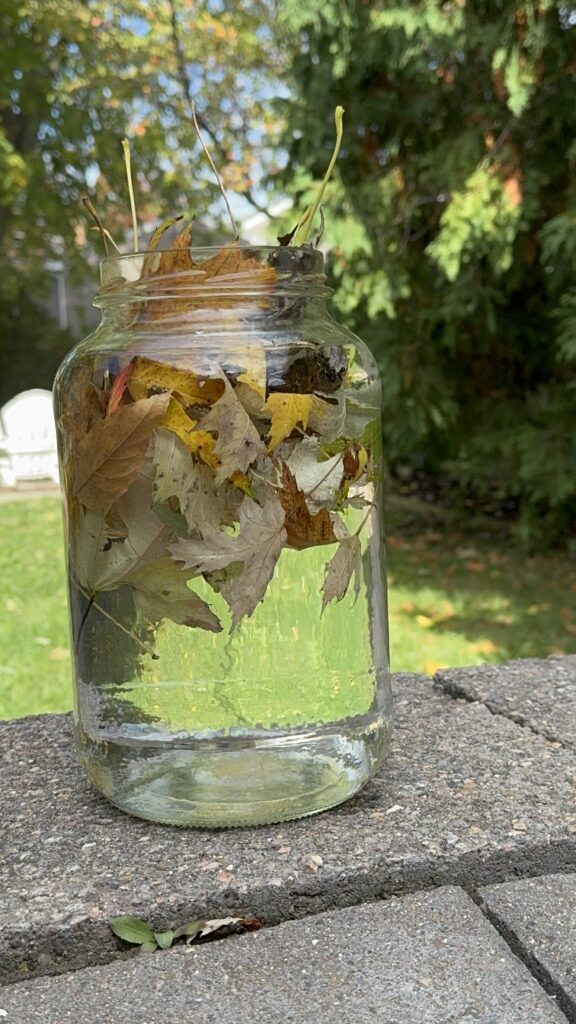
3. Wait a bit. The water starts to tint.
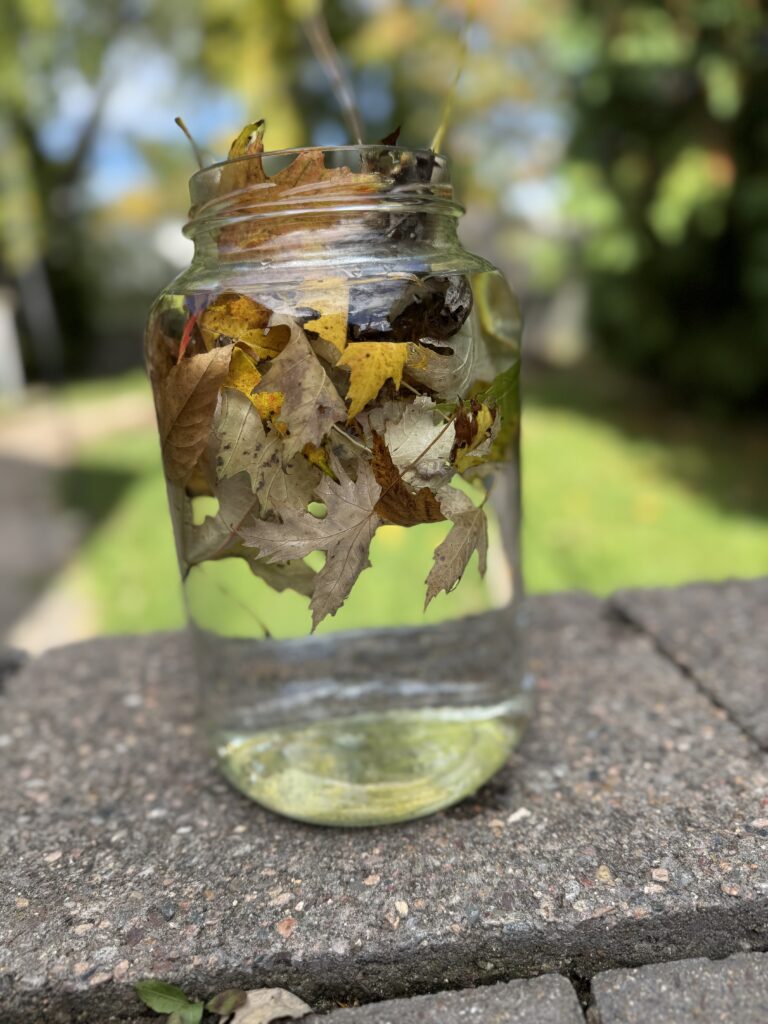
4. A little longer and you’ve got the color of tea.
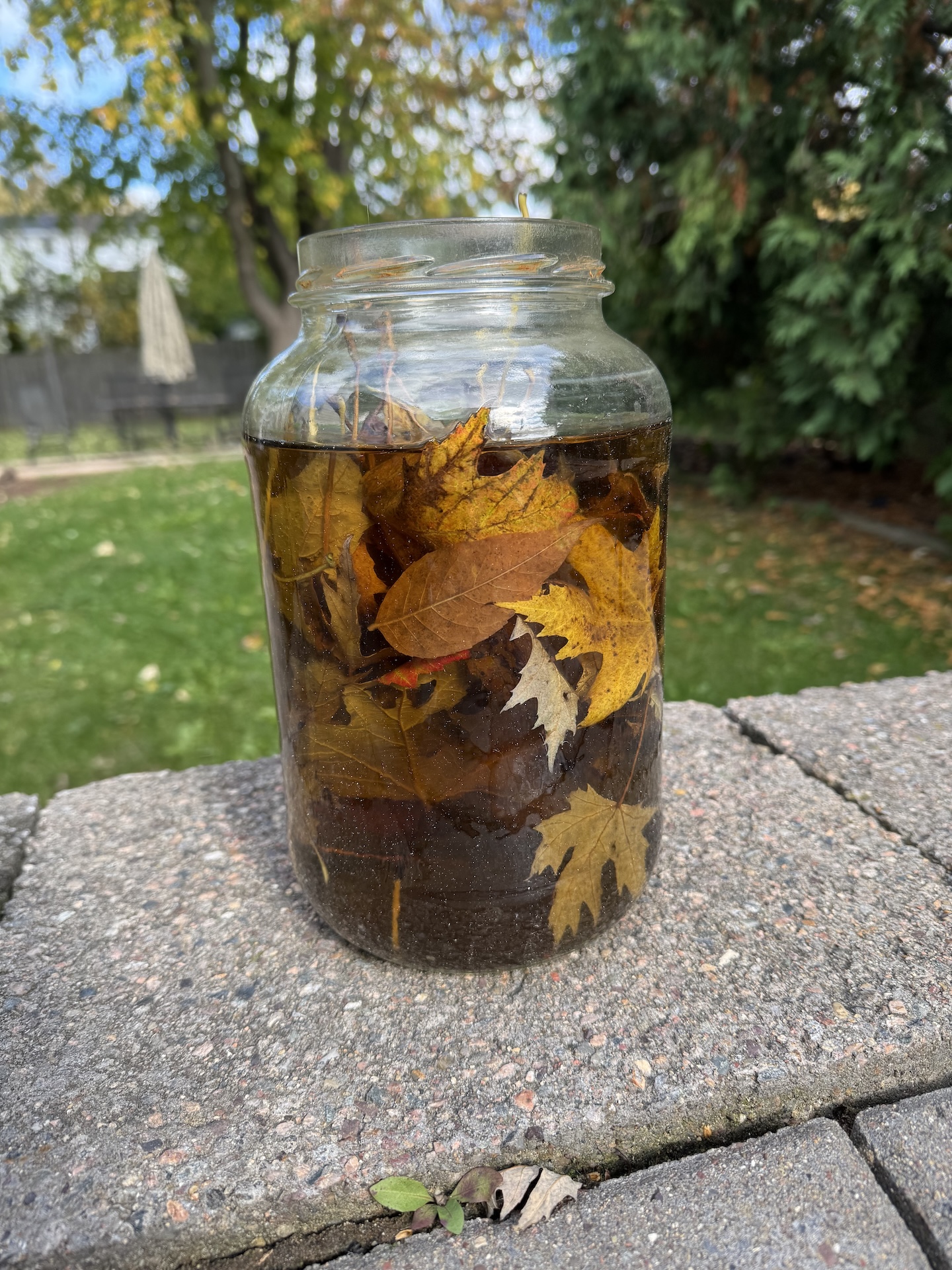
5. Keep leaves on your lawn or in garden beds and this “tea” will never reach the drain.
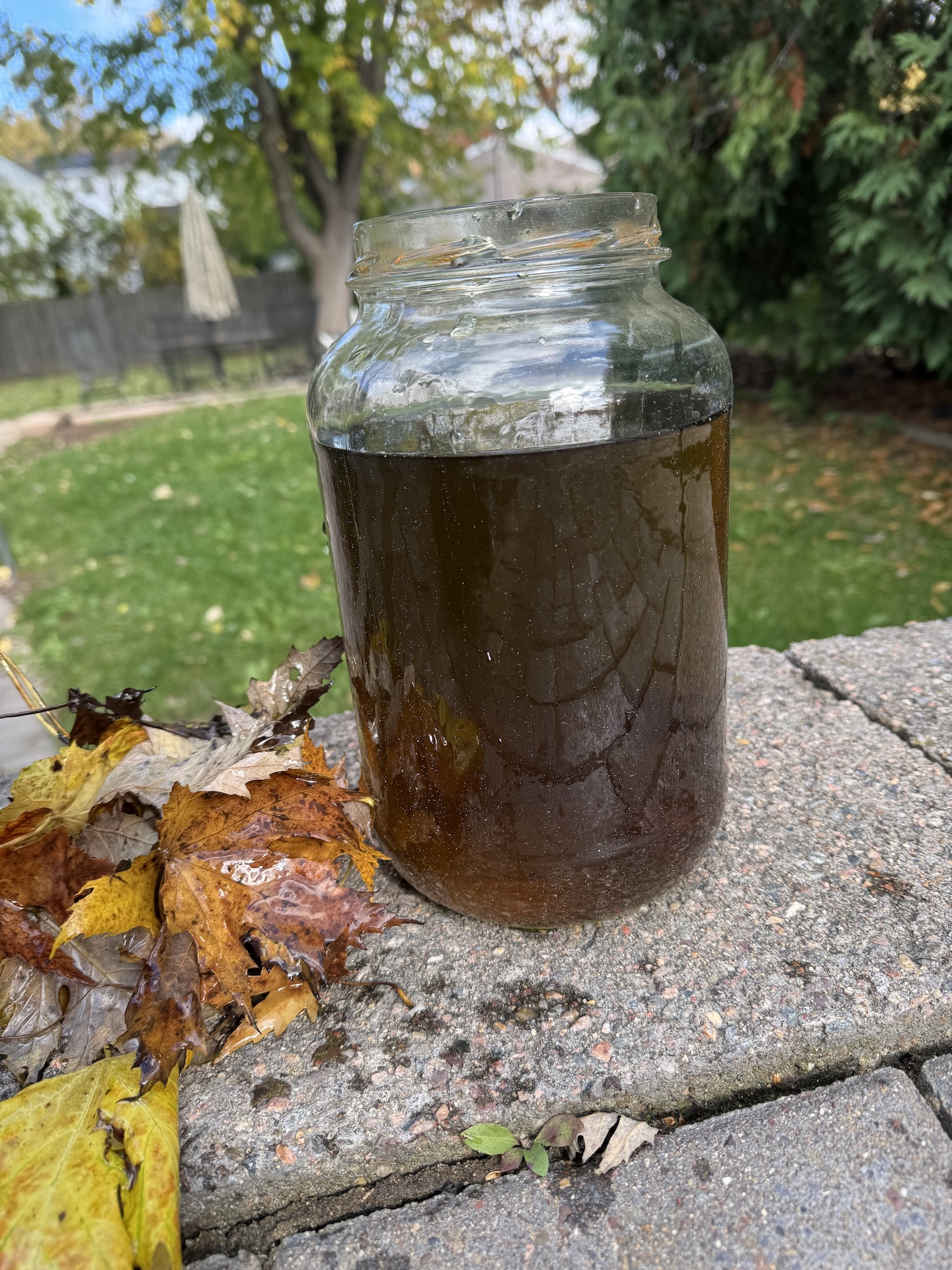
What that brown color really means
That tea-brown color is not phosphorus. It comes from tannins and other dissolved organic material that wash out of leaves, just like a tea bag colors water. The key point is that water pulls things out of leaves, including nutrients such as phosphorus. If this mix reaches the street, storm drains carry it directly to our rivers and lakes where it can feed algae. Keep leaves on the lawn or in garden beds, compost what you can, and keep curbs clear before rain.
Fox-Wolf friendly leaf moves
-
Mulch-mow leaves into the lawn.
-
Rake into garden beds as free mulch.
-
Compost the rest.
-
Keep curbs and storm drains clear before a rain.
Want more simple steps you can take? Read our guide: Leave Your Leaves on Land.
Small moves add up to healthier waters across the Fox-Wolf.
