Turning Fields into Filters
New Project alert!
New Project alert!
Turning Fields into Filters
Exciting news! Fox-Wolf Watershed Alliance and Waushara County Land Conservation Department are partnering on our new project – Turning Fields into Filters.
We’re working with 3 local agriculture landowners to transform over 80 acres of marginal land into natural filters with the power of wetland scrapes and habitat plantings. Aside from providing habitat for wildlife, these land transformations will also be a powerhouse for storing and filtering runoff water – stopping harmful nutrients and sediment from entering our waterways.
Exciting news! Fox-Wolf Watershed Alliance and Waushara County Land Conservation Department are partnering on our new project – Turning Fields into Filters.
We’re working with 3 local agriculture landowners to transform over 80 acres of marginal land into natural filters with the power of wetland scrapes and habitat plantings. Aside from providing habitat for wildlife, these land transformations will also be a powerhouse for storing and filtering runoff water – stopping harmful nutrients and sediment from entering our waterways.
What is Marginal Land?
Marginal land are the acres of fields that don’t produce good crops or high yields – simply put, they’re marginal. The reason for their marginality can differ. Sometimes, it’s because the ground is too wet or dry, soil too sandy or heavy, or maybe that part of the field is too hard for modern, large, farm equipment to access. Either way, all marginal land has one thing in common: it more than likely costs more to farm than it profits.
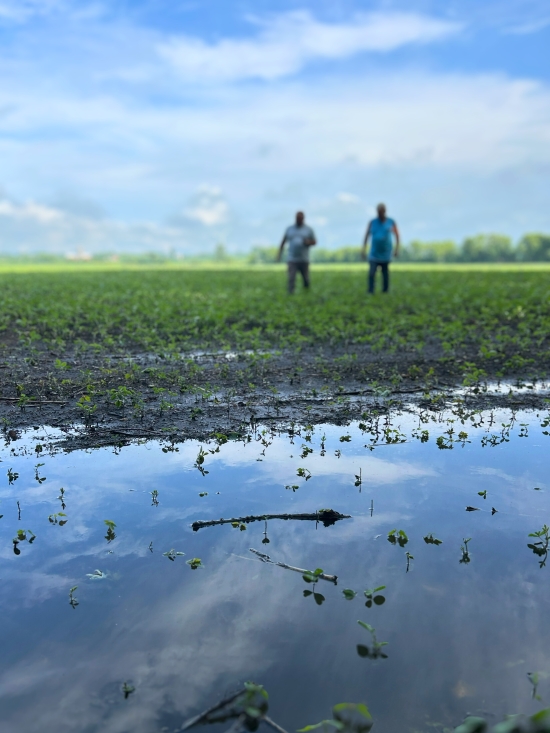
While not great for farming, these acres make for fantastic perennial conservation practices. From wetland scrapes, to ARTS, and habitat restoration, marginal land is often situated in just the right spot. By installing permanent conservation on marginal parts of fields, farmers also see benefits (aside from increased ROI). Depending on the site conditions and practices, farmers can see fields that are easier to work, have reduced flooding, better soil health, and more!
Project Overview
Here’s what we’re doing: taking ~85 acres of marginal farmland out of production in the Hatton and Willow Creek Watersheds in Waushara County and moving it into habitat restoration. We will be planting about 60 acres of prairie, grassland, and pollinator habitat, 20 acres of trees, and installing 6-8 wetland scrapes. These sites will be used as demos to show what can be done with marginal land, and how to do it!
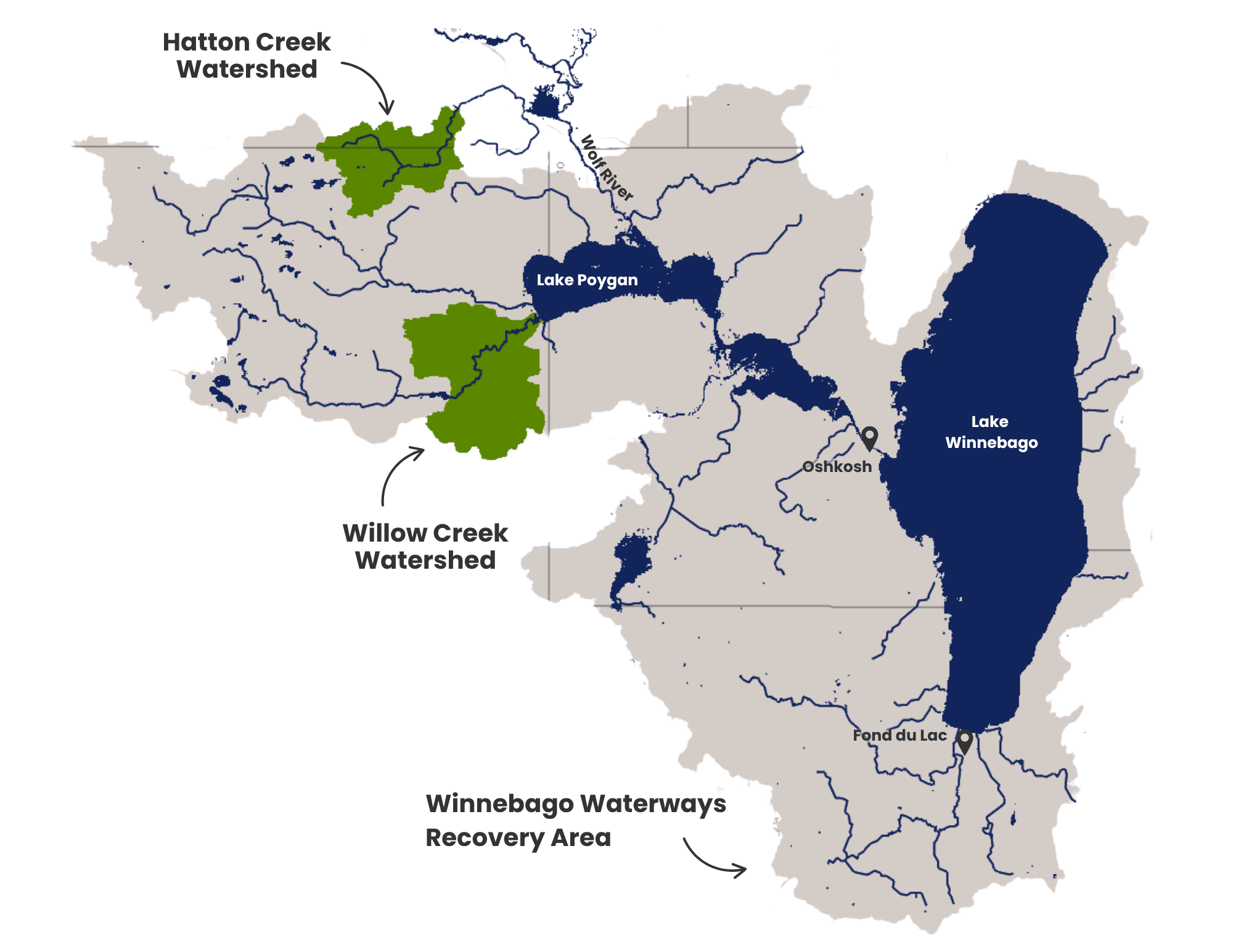
Take a look at where we’re working. The Hatton and Willow Creek Watersheds are both located in the western part of the Fox-Wolf Basin. The water in the Hatton Creek and its watershed first drain into the Wolf River, which then empties into Lake Poygan. The waters of the Willow Creek and its watershed on the other hand drain directly into Lake Poygan. The Willow Creek Watershed is the highest loading watershed to the Winnebago Lake System in Waushara County.
