
What is a Watershed?
and why you should care about yours.
Watershed 101
Watersheds can be tricky things to wrap your head around. They’re not super easy to see with the naked eye, and they often lack distinct visible boundaries when you not looking at them on a map.
So, what is a watershed? A watershed is an area of land where water collects and drains to a specific outlet (i.e. lake, river, stream). Every single acre of land belongs to a watershed, but not every acre of land is part of the same watershed.
By “water”, we mean all water – whether from rainfall, ice & snowmelt, rivers, lakes, or streams – is heading for a common location. For our watershed, the Fox-Wolf Watershed, our water is all headed for Lake Michigan’s Green Bay.
Sometimes, watersheds are called basins or river basins. These words can be used interchangeably. Watersheds also vary in size. Remember, every single waterbody has a watershed, so you could find the watershed for a small creek, or one for the enter Great Lakes region. We use HUCs (Hydrologic Unit Codes) to categorize watersheds by scale, size, and help organize their breakdown. A larger number equals a smaller watershed. Most commonly, we work with HUC 12s and 8s.

How a Watershed Works
A watershed is all the land where rain and snowmelt flow downhill into the same river or lake. This diagram shows how ridges, small sub-watersheds, streams, and groundwater all connect to shape the Fox-Wolf region.
Breaking Things Down: The Main Waterways
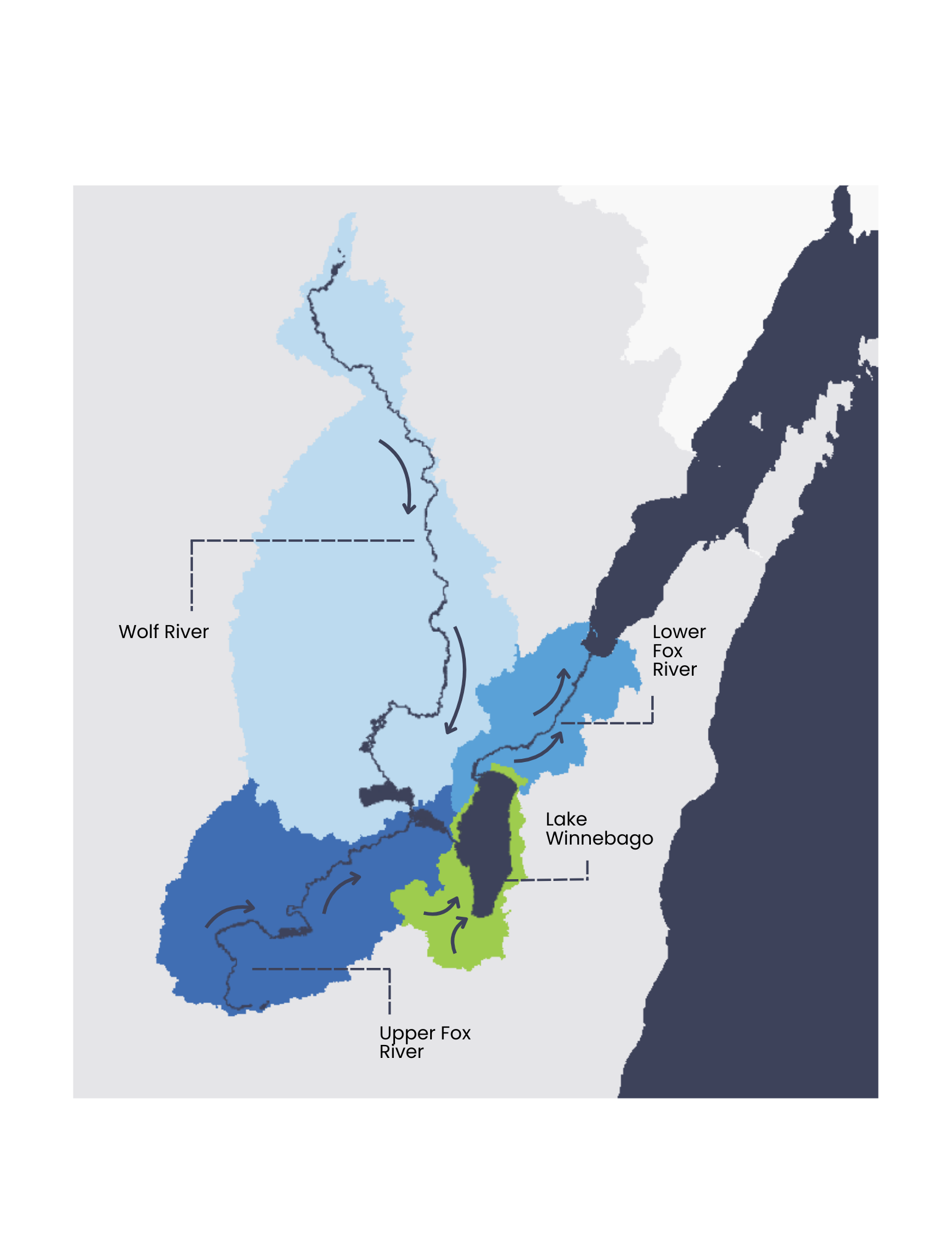
The Fox-Wolf Watershed can be broken down into 4 smaller, HUC 8 basins. These basins are the Wolf River Basin, Upper Fox Basin, Lake Winnebago Basin, and Lower Fox Basin.
Remember, all four of these basins are connected and make up the greater Fox-Wolf Watershed. The Wolf River drains into Lake Poygan. Lake Poygan drains into Lake Winneconne. Lake Winneconne and the Upper Fox River drain into Lake Butte des Morts. Lake Butte des Morts drains into Lake Winnebago. Lake Winnebago drains into the Lower Fox River, which finally, empties into Green Bay.
The Fox-Wolf Watershed Basins
The Fox-Wolf Watershed is made up of four connected basins — the Wolf River, Upper Fox River, Lower Fox River, and Lake Winnebago. Water from across this region ultimately flows into the Lower Fox River and Green Bay.
Why You Should Care About Your Watershed
You should care because all water is part of a watershed. Whether it’s coming off your driveway or yard, on the street, in a farm field, or from a construction site, that water is going to end up in a nearby waterbody.
Water can take two paths when it falls from the sky, leaves the spicket, or melts in spring. It can either end up as runoff, flowing over the land until it reaches a waterbody, or it can infiltrate into the ground and become groundwater.
Runoff water can (and almost always does) pick up pollutants on its way to a waterway. From lawn clippings to manure, runoff water can be full of harmful things. This is why it’s essential for all of us – homeowners, vehicle drivers, farmers, businesses, etc. – to do our part.
This runoff water carries all sorts of things, including sediment (dirt suspended in water), nutrients like phosphorus which feeds algae, chemicals, trash, and more ends up in our waters. These pollutants cause degraded water quality, which harms fish and wildlife habitat, causes HABs (Harmful Algal Blooms), and can limit our ability to enjoy our lakes and rivers through swimming, boating, fishing, and site-seeing.

Why Healthy Watersheds Matter
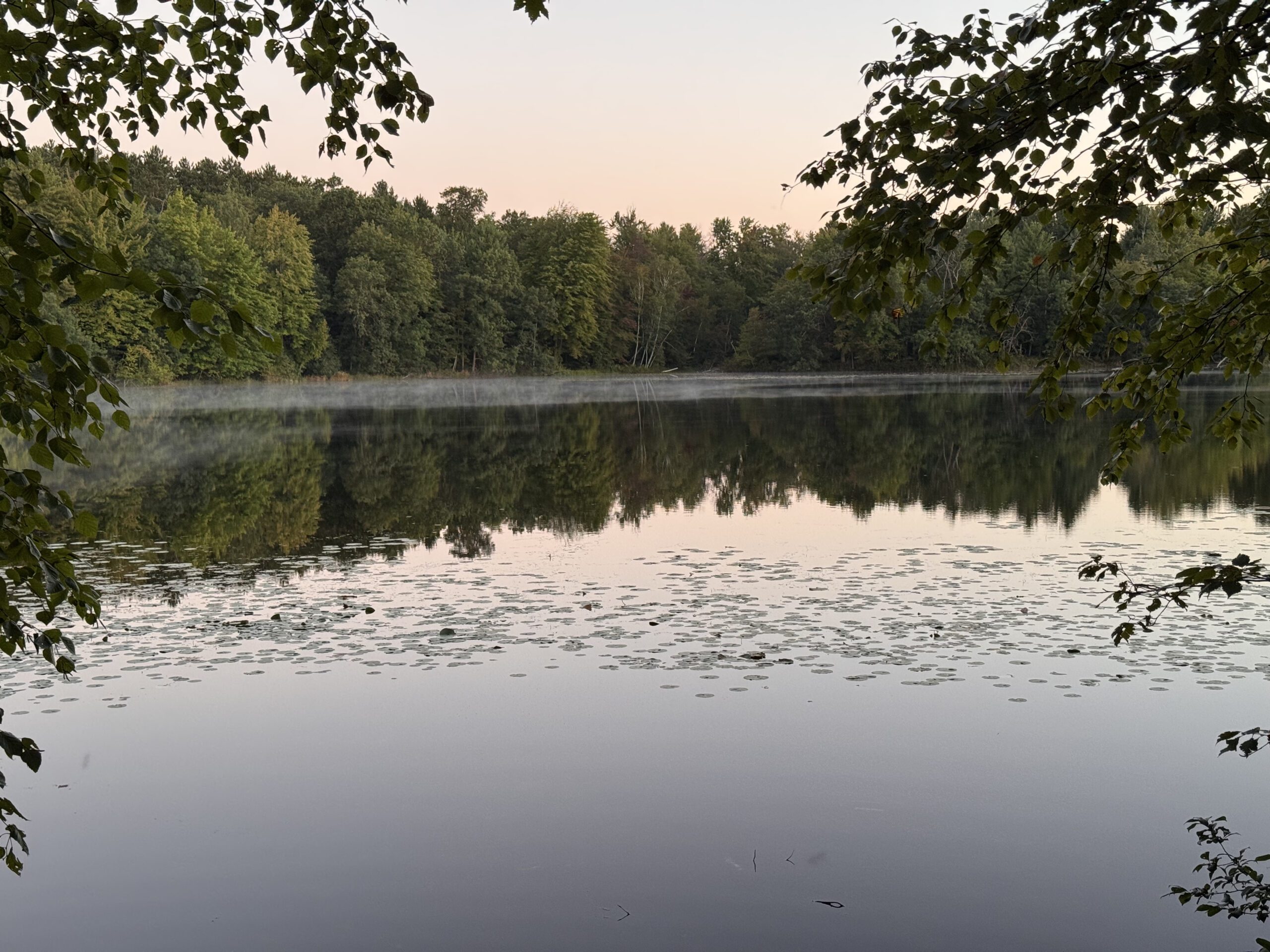
Wetlands and low-lying areas collect the water that runs off our streets, yards, and farm fields. When a watershed is unhealthy, that water can carry pollution into the places wildlife depends on — and the places we love.
What You Can Do
Generally speaking, there are two things we can do: 1) reduce pollutants available for runoff to pick up, and 2) increase the amount of water infiltrating into the ground, reducing the amount of runoff water.
So, how can you do this? Learn more here →
With everyone making small changes, we can see real changes in our water! Whether that means farmers reducing the amount of tillage they do, homeowners skipping fertilizer for their lawns, or cities salting wisely, little changes can lead to real change.
