

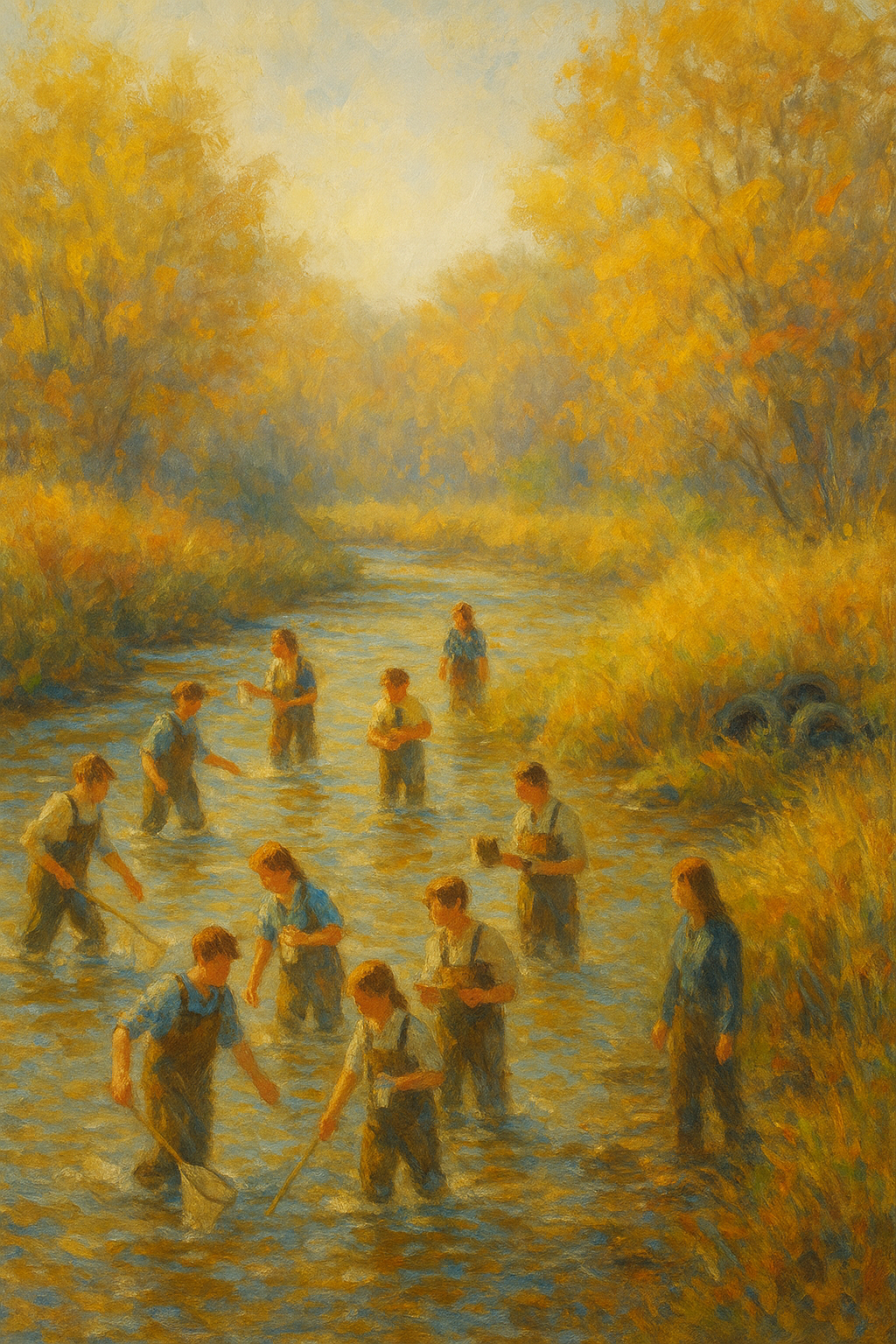
Some mornings, the small stream her class monitored sounded less like a science lab and more like a playground. Teenagers in chest waders shuffled into the water, trying not to splash each other. A football arced over a shallow stretch near the far bank. Someone shouted they had seen a frog, hands spread wide to show how big.
In the middle of it all was Barb Reed, a science teacher counting clipboards and sample bottles as her class spread out along the shoreline. For more than twenty years she brought students out through the Lower Fox River Watershed Monitoring Program, giving them a chance to study real water in their own community.
“The students loved it,” she says. “They loved going in the water. That was always the fight, who was going to get to wear the waders.”
Before anyone stepped off the bank, Barb walked them through how to calibrate meters, label every bottle, and pack what they would need. Once they were in the current, the lesson shifted. Chemistry and biology stopped living on the whiteboard and started to live in the push of the water against their legs and in the tiny creatures wriggling in their nets.
“Their eyes were really opened.
They were not happy about it.”
One fall, her class reached a familiar site and went unusually quiet. A stretch of bank they knew had been used as a dump. Tires and other debris crowded the edge of the stream where they usually knelt to take measurements. The jokes trailed off.
“Their eyes were really opened,” Barb remembers. “They were not happy about it.”
Students documented what they saw, ran their tests, and kept talking about it on the bus ride home. For Barb, it was the first time she watched a whole group shift from “this is a fun field trip” to “this is not okay.”
The next time they visited, there were fewer tires.
On the third trip, the piles were gone. Someone had cleared the site. No sign, no announcement, just open shoreline again.
Her students stood there for a moment, taking it in, then started pointing and laughing about where the “tire pile” used to be. They still had work to do. They stepped back into the water, checked their watches, and went right back to collecting samples. But the spot felt different now. They had seen it at its worst and seen it improve.
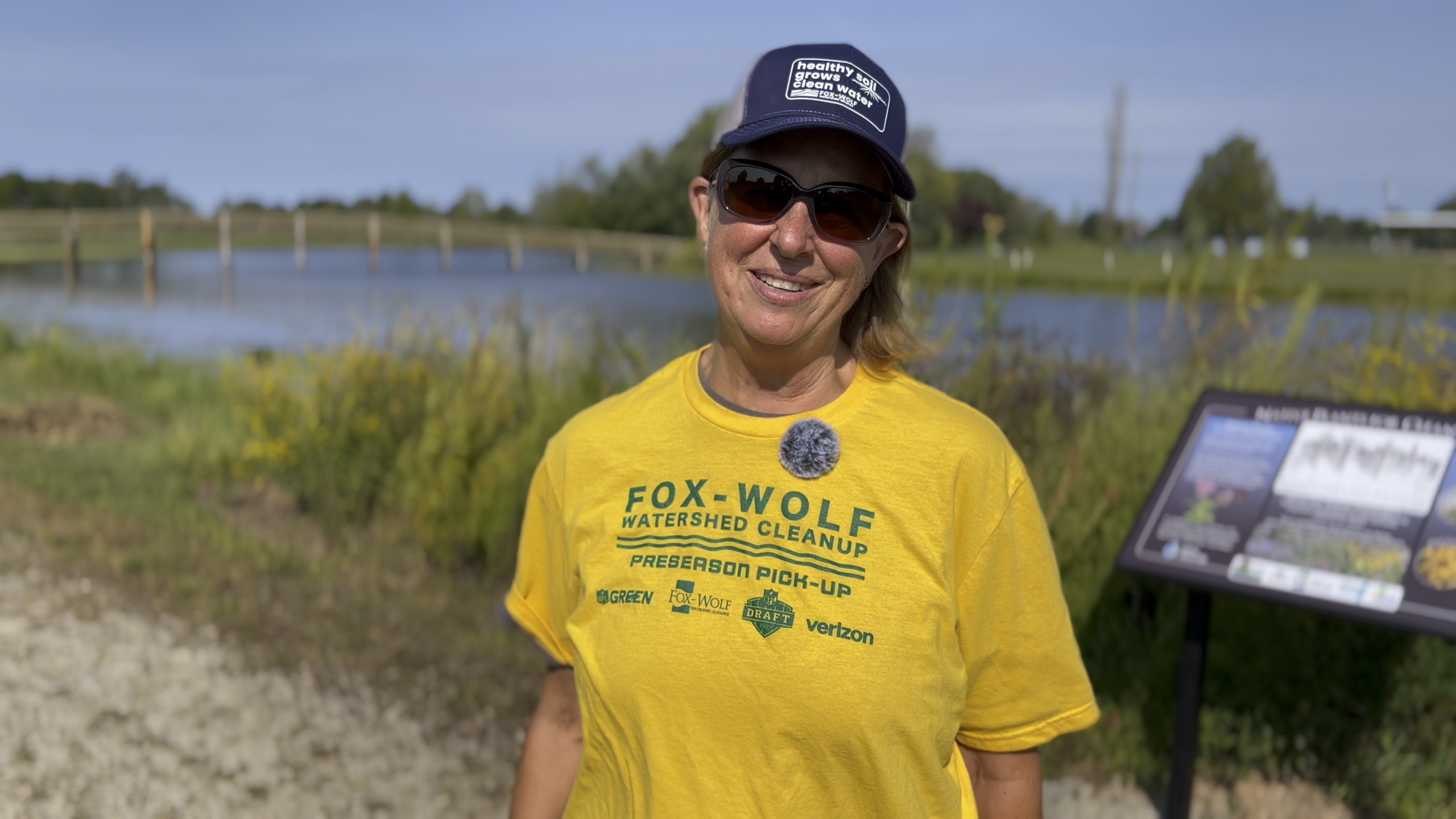
Years later, that part of the stream still comes to mind when Barb joins Fox-Wolf Watershed Alliance volunteers for cleanups and community events. She sees the same mix of curiosity and care in adults hauling trash out of backwaters that she once saw in teenagers passing sample bottles hand to hand.
“I am happy about how these young people are picking up the torch,” she says.
For Barb, the waders, the football, the cleared streambank, and the steady pull of the current all belong together. The water is still a place to laugh and learn.
It is also a place that answers back when people decide to look after it.
WATCH: Barb’s Watershed Impact Award
In 2025, Barb was honored with a Fox-Wolf Watershed Impact Award for her work and dedication to strengthen water quality throughout the watershed.
Watershed Moments is a quarterly publication from the Fox-Wolf Watershed Alliance, sharing true stories of people whose lives have been shaped by water—and the moments that sparked their care for it.
Read more Watershed Moments, or support this work with a donation.