
Prepping for Spring:
Cover Crop and No-Till Edition
Written for the Spring ’25 Basin Buzz by Eric Bertram
with additions by Tim Burns
As harvest wraps up and machinery is tucked away for the season, our thoughts turn toward the next cropping season. What challenges will the new growing season give us? Are we prepared to overcome these challenges? We need to control the variables that we can to give us a better chance for a successful new crop.
For producers that are working toward or already have implemented conservation practices on their farms, there will be a few more things that will need attention. Plans for cover crop termination, planter maintenance and repair, as well as having a support team are crucial to being successful as you transition acres to conservation practices.
terminating cover crops
The species of cover crop you have planted in your field will determine how it will be terminated. Freezing temperatures will normally terminate cover crops such as oats, berseem clover, radishes, and turnips. If an overwintering species such as winter rye, winter wheat, or triticale has been planted and you plan to terminate it with herbicide, do so as soon as field conditions and temperatures allow.
A non-selective herbicide such as glyphosate should be effective in terminating grasses if the temperature parameters on the label are followed. Daytime temperatures above 50-55°F with nighttime temperatures above 40°F are generally recommended. You may also be able to apply your pre-emergent herbicide with the same pass to reduce the cost of a second application. Talk with your county representative or agronomist ahead of time and make sure you have a plan before the spring rush begins.
Planting green or harvesting your cover crop for forage are both great ideas but each present a different set of challenges. If either of these is your intention, a different approach to cover crop termination will be needed. Again, consult your county representative or agronomist to discuss termination ahead of time to be sure you’re prepared.
Helpful Tip
The timing of cover crop termination is likely to vary year to year depending on weather conditions. Both early and late termination have their benefits and consequences.
In dry springs, cover crops should be terminated early to avoid them sucking up the already limited soil moisture. As an added benefit, the mulch residue will cover the soil, keeping away the sun’s rays and holding in moisture.
For wet springs, early termination really isn’t realistic. You don’t want to be compacting a field by driving through it when soil is waterlogged. By keeping covers standing, they can utilize that extra moisture helping to dry things quicker, while keeping in soil and nutrients in the field, and making things more trafficable with their residue.
getting equipment ready
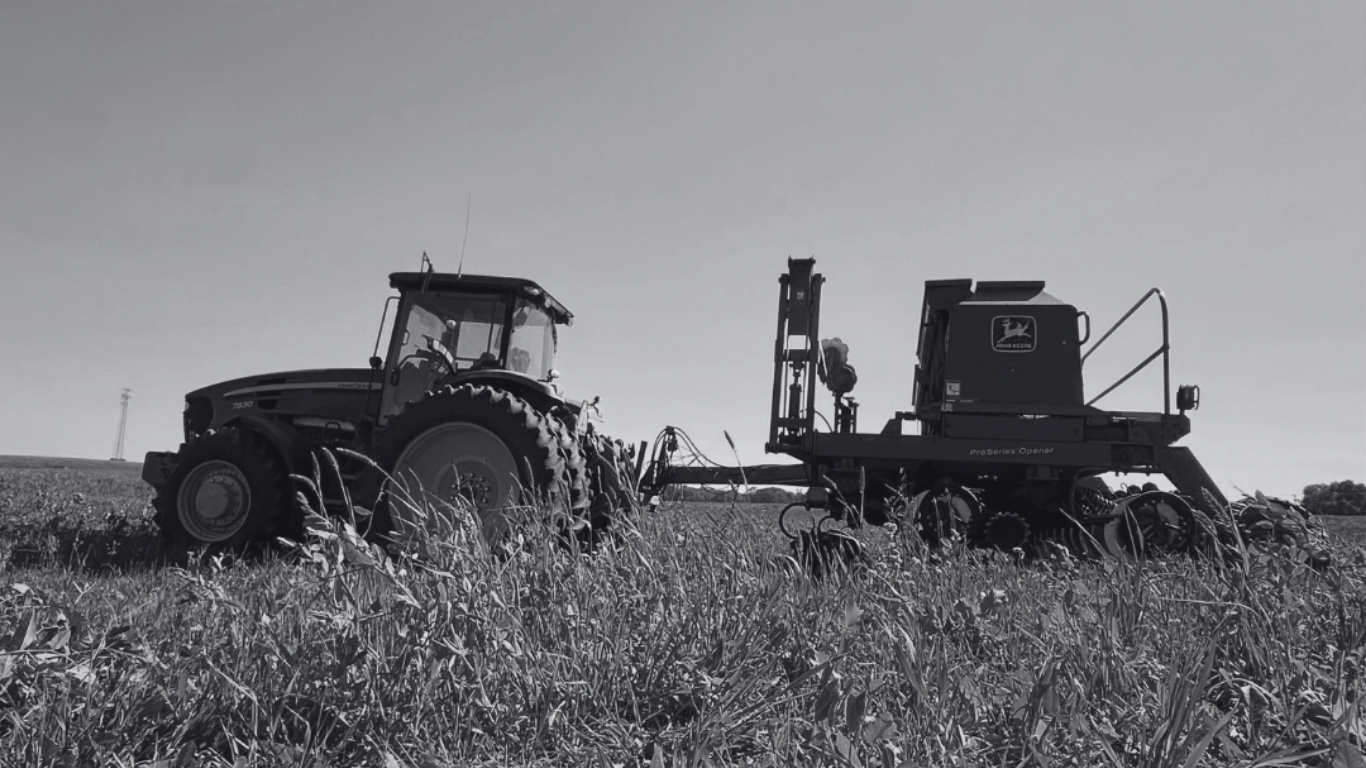
Don’t expect to pull the planter out of the shed the day before planting! Be sure to capitalize on downtime during the winter months to have equipment ready for spring. Whether you are new to no-till or have several seasons under your belt, multiple parts will need to be inspected and replaced if necessary to ensure that your crop is planted in the best conditions possible.
Parts like row cleaners, closing wheels, gauge wheels, opening disks, seed tubes, and guards need to be inspected for wear and if necessary, replacement. Depth control, sidewall compaction, hair pinning, down pressure, and good seed-to-soil contact are all elements to consider in being successful with no-till planting.
patience, planning, & learning
Patience – One of the most important elements when converting to conservation practices is patience. The conversion to a continuous cover system, utilizing cover crops or no-till, or just changing current management practices is not a “one-year wonder.” There will be growing pains and some setbacks. Make sure that you have a good support team to help you on your journey like your county’s Land Conservation Department Staff. Above all, keep an open mind and set realistic expectations as you begin making steps towards conservation practices.
Planning – It’s always a good idea to have a plan, and no-till and cover crops are no exception. In fact, many farmers who use these practices are starting to use contingency planning – having a Plan A, B, C, D in their back pockets that they can quickly turn to if conditions change.
Cover crop termination is a great example of this – we don’t have a crystal ball to tell us what spring will look like. Think through how you can pivot if conditions are wet or dry, the co-op is late with spraying, or a cover crop you didn’t think would overwinter this year (looking at you, hairy vetch) comes back to life.
Having Plan A, B, and C isn’t the only important part, being flexible and proactive to changing conditions are just as important. When you start to notice something’s likely not going to plan, be ready to adapt and fall back on Plan C.
Learning – Winter is also a great time to build up your knowledgebase. While for most of us, time and experience help us learn the best, hearing from farmers who are working similar systems to you can be incredibly beneficial. Locally, we have many soil health and conservation agriculture focused events over the winter.
The Farmer Roundtables are a great example of this. They provide peer to peer learning, offer a time to hear what’s happening in the local soil health space, and learn a few local tips and tricks. Go to www.fwwa.org/roundtable to learn more.
