Help Stop the Introduction of Invasive Plants into Wisconsin Gardens
Original Story By Melinda Myers
“Defending our Health by Stopping the Spread” is this year’s focus for National Invasive Species Awareness Week (NISAW), Feb 23-27, 2026. This international event is designed to increase awareness about invasive species. Who better to enlist in this effort than gardening aficionados like you?
As we approach February, gardeners are busy browsing catalogs, reading garden articles and looking for sources of new plants. Be sure to check your plant wish list for any invasive plants that are classified as prohibited or restricted in Wisconsin before placing any orders online. Review Wisconsin’s Invasive Species Rule, Chapter NR40. Prohibited plants are those that are not currently found or occur in isolated areas in the state. If introduced into the state, these plants are likely to cause significant economic or environmental harm or harm to human health. Restricted plants are already established in the state, causing harm or having the potential to cause significant harm. Neither can be bought or sold and prohibited plants cannot be possessed.
Although regulations for the sale, purchase and possession of invasive species are in place, some online sellers are not aware, not up-to-date or not concerned with following existing state and federal regulations. Just because you can purchase a plant online does not mean it is allowed in Wisconsin. It is up to us, the individual gardener, to make sure invasive plants do not end up in our gardens, natural spaces and waterways.
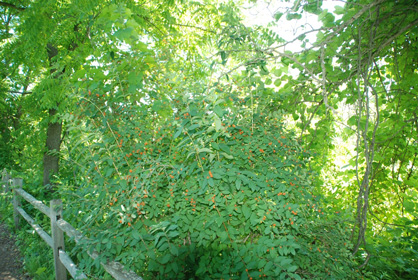
Honeysuckle. Photo: Melinda Myers
Growing even one or two invasive plants in your garden, shoreline planting or pond can make a big difference. Invasive plants can be vigorous growers and often reproduce faster than our native plants, negatively impacting them and the songbirds, beneficial insects and wildlife that depend upon these plants.
It’s not just the environment. Some of these plants also have a negative impact on their health. Invasive populations of honeysuckles, buckthorns and barberries form dense thickets with high humidity beneath the plants, a perfect environment for ticks. Researchers found an abundance of Lyme-disease carrying ticks in areas with dense barberry populations. Another study found the percentage of ticks collected in honeysuckle-infested woods with disease-causing bacteria was 10 times higher.
Save Yourself Time and Effort
Managing existing invasive plant populations can be overwhelming. Prevention is an easy and inexpensive first step in the battle against these problem plants. Help yourself to avoid creating more work and expense for yourself; do your research before purchasing plants this season.
When in doubt, check the invasive species page on the Wisconsin Department of Natural Resources website. Just enter the name of the plant in question to check its status in Wisconsin. This site also contains detailed information on identification, the ecological threat and management options for invasive plants.
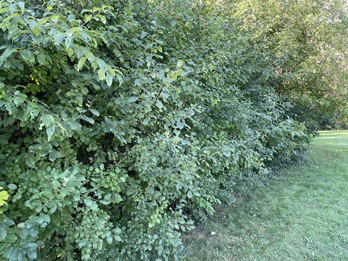
Buckthorn. Photo: Melinda Myers
You may also find the Strategies for Managing Invasive Plants webinar recording and handout useful. The handout contains an extensive list of free resources and links on this topic. This even covers established plants that you might be struggling with on your property like buckthorn.
Don’t forget to always dress appropriately and check for ticks when removing invasive plants or enjoying the outdoors. Tick checks done right after you come back indoors and a shower within two hours of time spent outside help reduce the risk of tick bites.
Thanks to all of you who are already spreading the word and actively trying to manage invasive terrestrial and aquatic plants. If you or others are interested in volunteering to help control invasive plants, email DNRAISinfo@wisconsin.gov. Together we can make a difference!
Photo Credit: Melinda Myers
Melinda Myers has written more than 20 gardening books, including the Midwest Gardener’s Handbook, 2nd Edition and Small Space Gardening. She hosts The Great Courses “How to Grow Anything” streaming courses and the nationally syndicated Melinda’s Garden Moment radio program. Myers is a columnist and contributing editor for Birds & Blooms magazine and was the Plant Doctor on WTMJ radio in Milwaukee for over 20 years. Myers’ website is www.MelindaMyers.com.
Questions? Comments? Contact Chris Acy, the AIS Coordinator covering Brown, Outagamie, Fond du Lac, Calumet, and Winnebago Counties at (920) 460-3674 or chris@fwwa.org!
Follow the Fox Wolf Watershed Alliance’s Winnebago Waterways Program on our Winnebago Waterways Facebook page or @WinnWaterways on Twitter! You can also sign-up for email updates at WinnebagoWaterways.org.
Winnebago Waterways is a Fox-Wolf Watershed Alliance program. The Fox-Wolf Watershed Alliance is an independent nonprofit organization that identifies and advocates effective policies and actions that protect, restore, and sustain water resources in the Fox-Wolf River Basin.
Check out the Keepers of the Fox Program at https://fwwa.org/watershed-recovery/lower-fox-recovery/
