

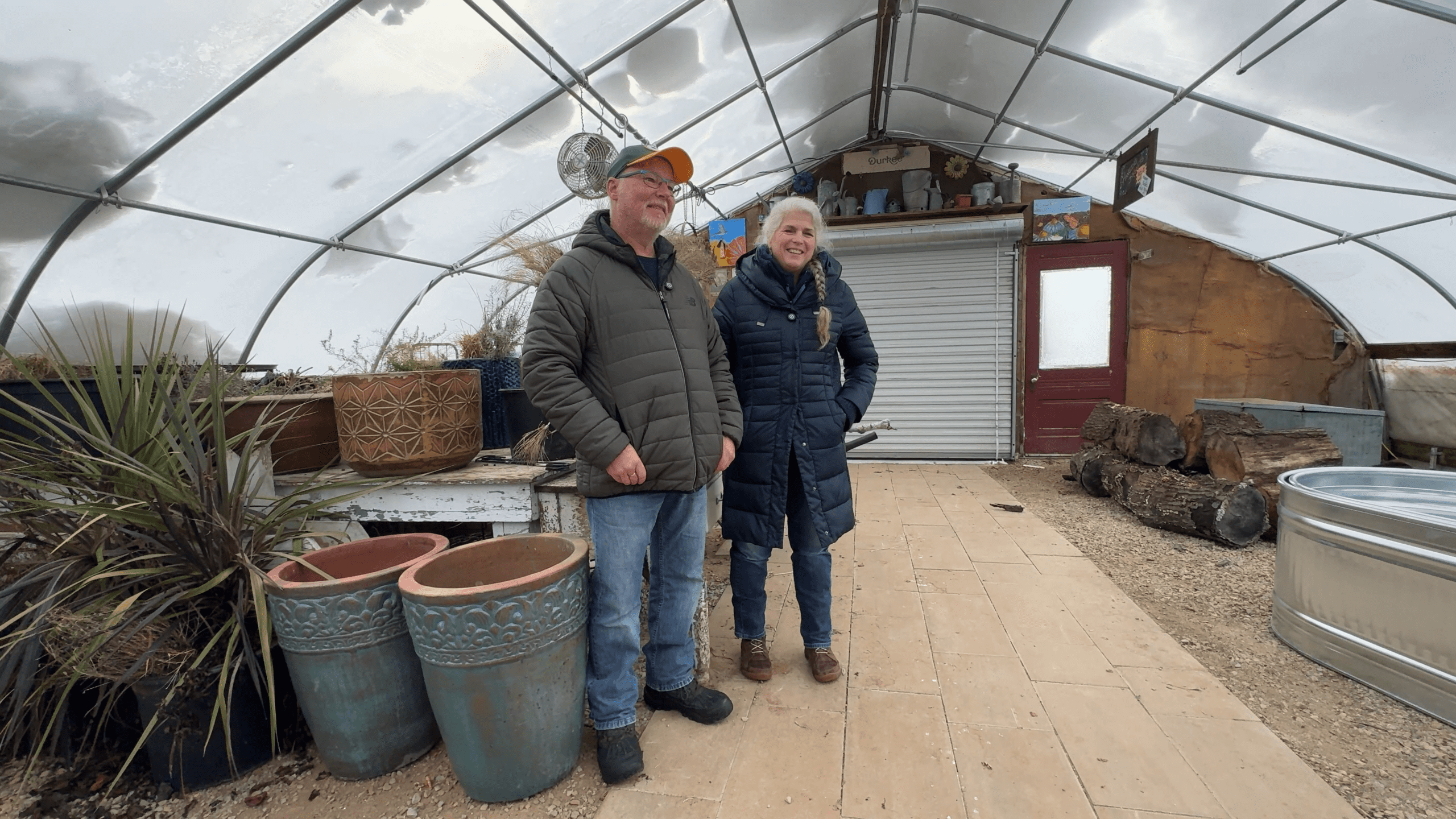
Scott and Shelly Christie didn’t set out to restore a field.
When they bought their place in Waushara County in 2010, the plan was practical. The farmhouse could hold office space for Shelly’s landscaping business. The open ground could store equipment. And like a lot of rural properties, part of the acreage could be rented to a neighboring farmer to help cover the taxes.
For years, that’s exactly what they did. But living there changed the way they saw the land.
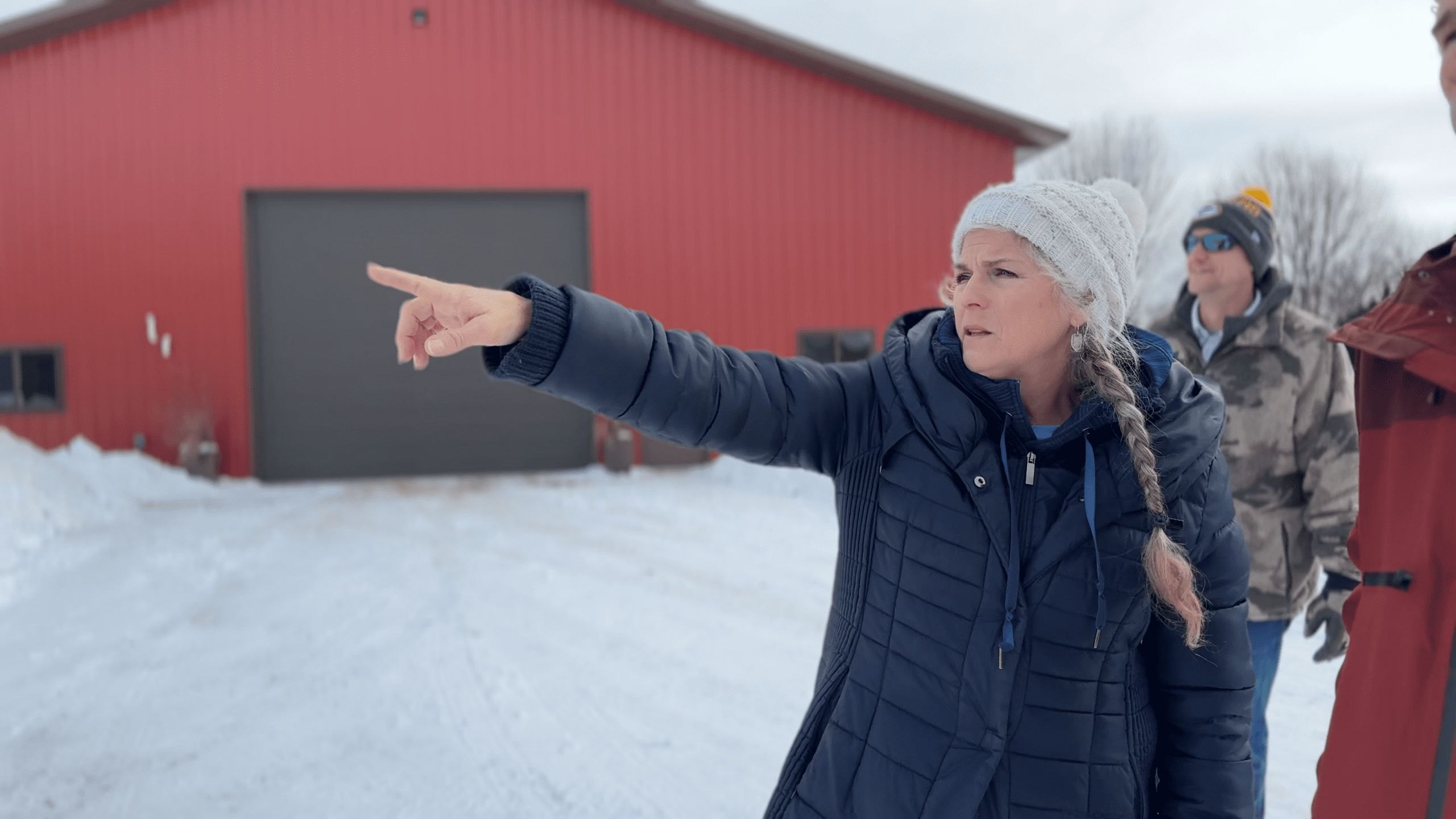
In 2014, they opened a small garden center on the property. “It’s kind of an ironic twist how we got this place in the middle of nowhere,” Shelly said. “People were like, what are you doing buying in the middle of nowhere for your small business?” She didn’t want a big retail place on a busy highway. “It was really all about, being in the country, seeing the natives, seeing the wildlife, and sharing that experience with others,” she said.
Scott remembers how uncertain it felt at first. “We never imagined it would be like this standing here today,” he said. He used to tell people that “Shelly had the dream of making this a destination spot and at one time was like, nobody’s ever going to find us out here.” Now he says it plainly: “I’m very proud that it has become a destination in a beautiful spot.”
“It doesn’t seem to always produce the best, you know?”
The property has a way of pulling your attention outward. Deer move through regularly. Fox show up too, including gray fox. They’ve seen bear and badger. The ground itself is varied, a mix of sandy stretches, wetter corners, rocky areas, and a rise they call Stone Hill.
Then there’s the water.
On their forty acres, they’ve got “two running wells and one artesian well,” Shelly said, “which is phenomenal. The water tests are amazing.” Nearby is Ashton Creek, a trout stream right next door to them.
Clean groundwater and a cold-water creek have a way of sharpening your attention to what happens uphill.
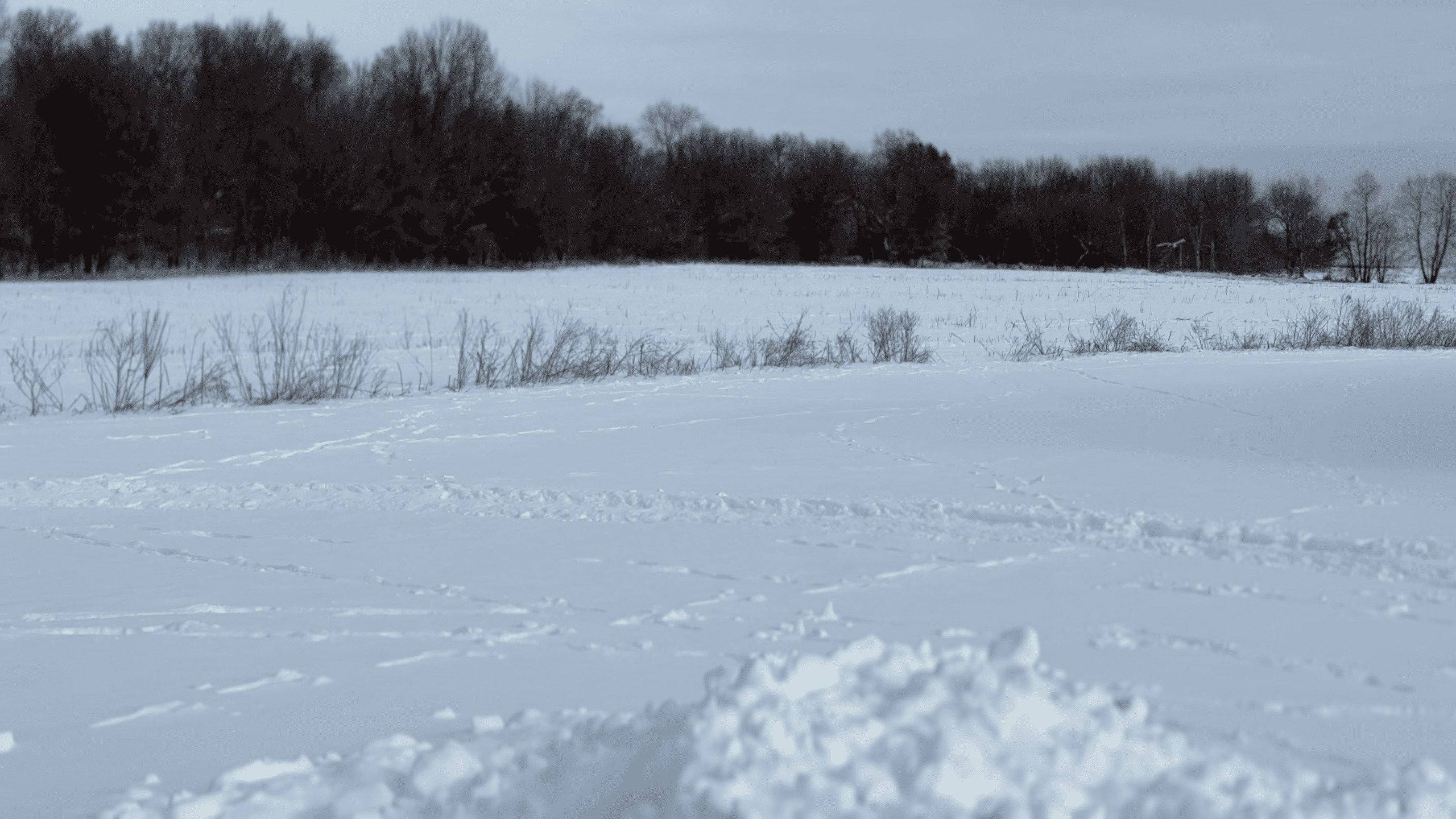
Part of their property remained in row crops. Renting it out made sense, and it was what the land had always done before. But over time, the limits of that field became harder to ignore. “I’m not a farmer, so I’m not judging,” Shelly said, “but it doesn’t seem to always produce the best, you know? And we’ve even been told by our neighbors it’s marginal.”
Once you notice that, a different question shows up almost on its own: if this ground struggles to be productive, could it be more valuable doing something else?
That question became their watershed moment.
The Christies started exploring what it would mean to transition the field back into habitat. Not overnight. Not dramatically. Just steadily, with the long view in mind.
Now, with help from Fox-Wolf and local partners through a project called Turning Fields into Filters, they’re making that shift. Last fall, the final crop came off roughly eighteen acres. After that, restoration could begin.
The idea behind the project is straightforward. When land is repeatedly worked and left with shallow-rooted annual crops, soil becomes more vulnerable, and nutrients move more easily during rain and snowmelt. Native grasses and perennial plants send their roots deep into the ground, helping hold soil in place and absorb excess nutrients before they can wash toward nearby waterways. Instead of shedding runoff, the land starts to slow it, filter it, and hold it.
Shelly knows restoration takes humility. Even as a plant professional, she understands that this scale is different. “I’ve always said God’s the best landscaper around.” The property isn’t uniform, and the plants can’t be either. The rule becomes simple and demanding: the right plant in the right place.
And they’re not doing it alone. “It still helps having someone hold your hand a little bit,” Shelly said. “I don’t know that we’d be here without that help.”
Their timeline is practical. Within three to seven years, they hope to see an established habitat. Not massive, but enough to matter. Enough to support pollinators and wildlife, and to show what it can look like when land is allowed to return to itself.
Not every watershed moment arrives as a crisis. Sometimes it arrives as a clear-eyed decision, rooted in what the land is already telling you.
And just beyond their property line, that trout stream will keep running.
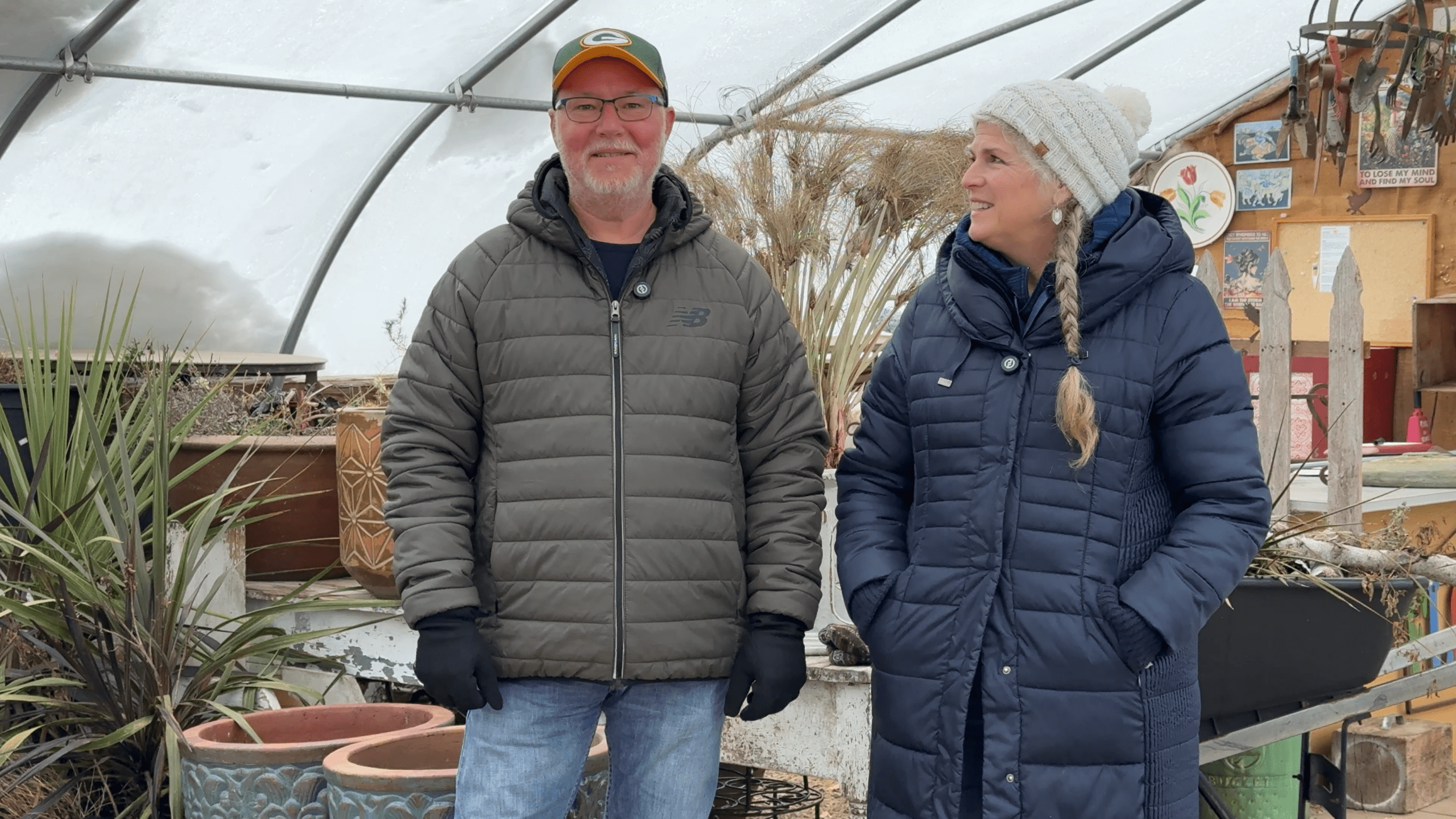
Watershed Moments is a quarterly publication from the Fox-Wolf Watershed Alliance, sharing true stories of people whose lives have been shaped by water—and the moments that sparked their care for it.
Read more Watershed Moments, or support this work with a donation.