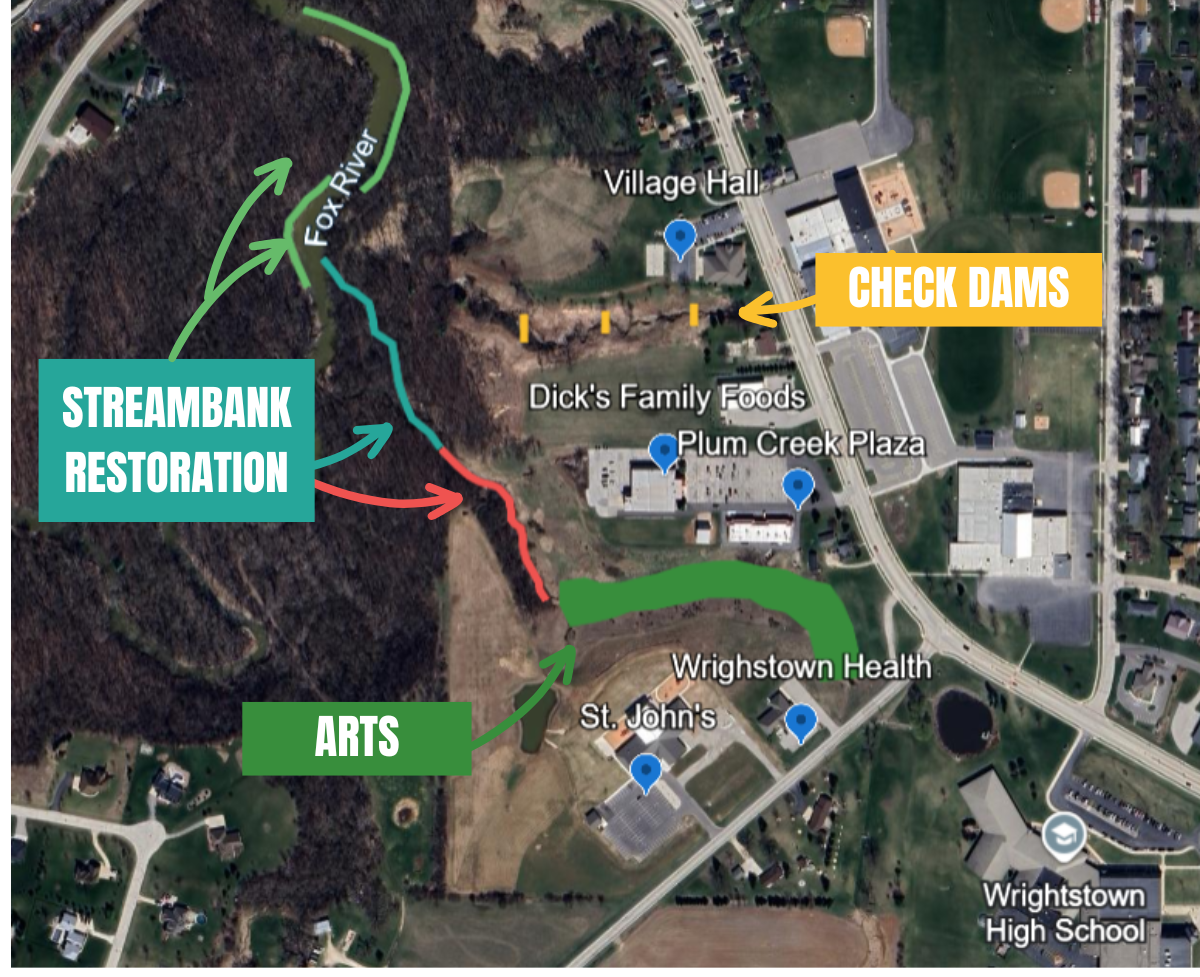
Let’s focus in on the ARTS!
One of the key components in the system installed as part of the Wrightstown restoration project is an agricultural runoff treatment system, or ARTS for short, (learn more about the concept here). Similar to a stormwater pond, ARTS are designed to capture runoff, slow water, and settle sediment, but they also have the capability to remove phosphorus, the nutrient that fuels algae blooms.
In Wrightstown, the ARTS captures runoff from the farm fields upstream on the outskirts of residential development and the high school. Water runs off these fields, into drainage ditches, and under Hwy D. In times of heavy rain, a lot of water rushes quickly over those farm fields, picking up soil and nutrients and carrying them to the area behind the grocery story complex and eventually into Plum Creek. Historically, the water has moved so quickly that it has channelized and created deep gullies across the land that carve deeper and wider each time the water rushes through.
The project area was completely redesigned to address the amount of water flowing through the system. The ARTS provides a mechanism to capture and slow the water as well as remove soil and nutrients before it flows out toward Plum Creek and the Fox River.
ARTS Design
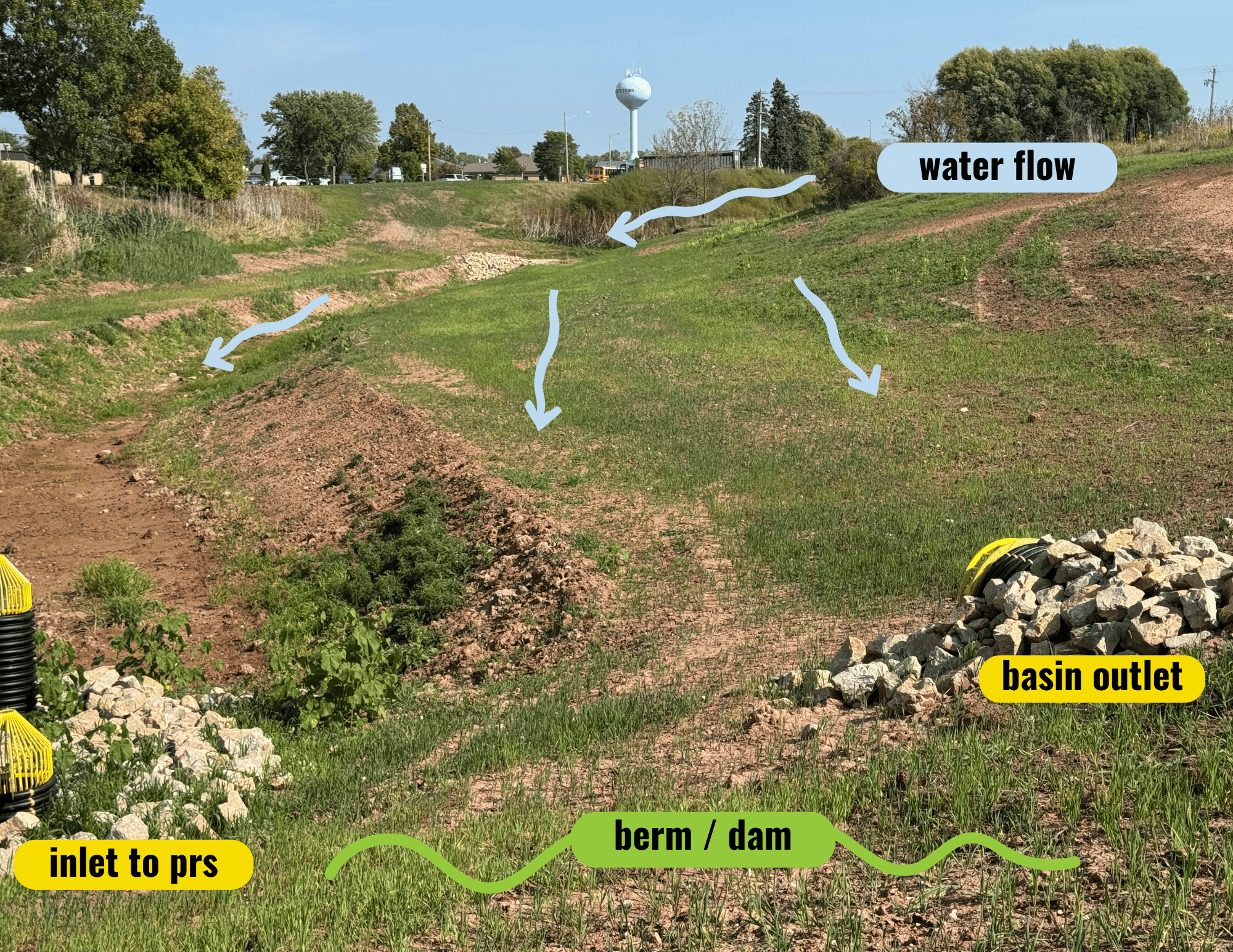
The ARTS begins by collecting water running to the system, slowing it and holding it to allow sediment to drop out. Water runs off agricultural fields upstream and is concentrated to a drain pipe that runs under Hwy D near the corner of High Street (the top right of the image). Along with water that runs off the nearby slopes, the drainage water runs down into the basin, which has the capacity to hold enough water to account for large rain events. A berm, or dam, holds the water in the basin, controlling the volume and speed at which it continues to flow via basin outlet or into the phosphorus removal system (PRS) through the inlet.
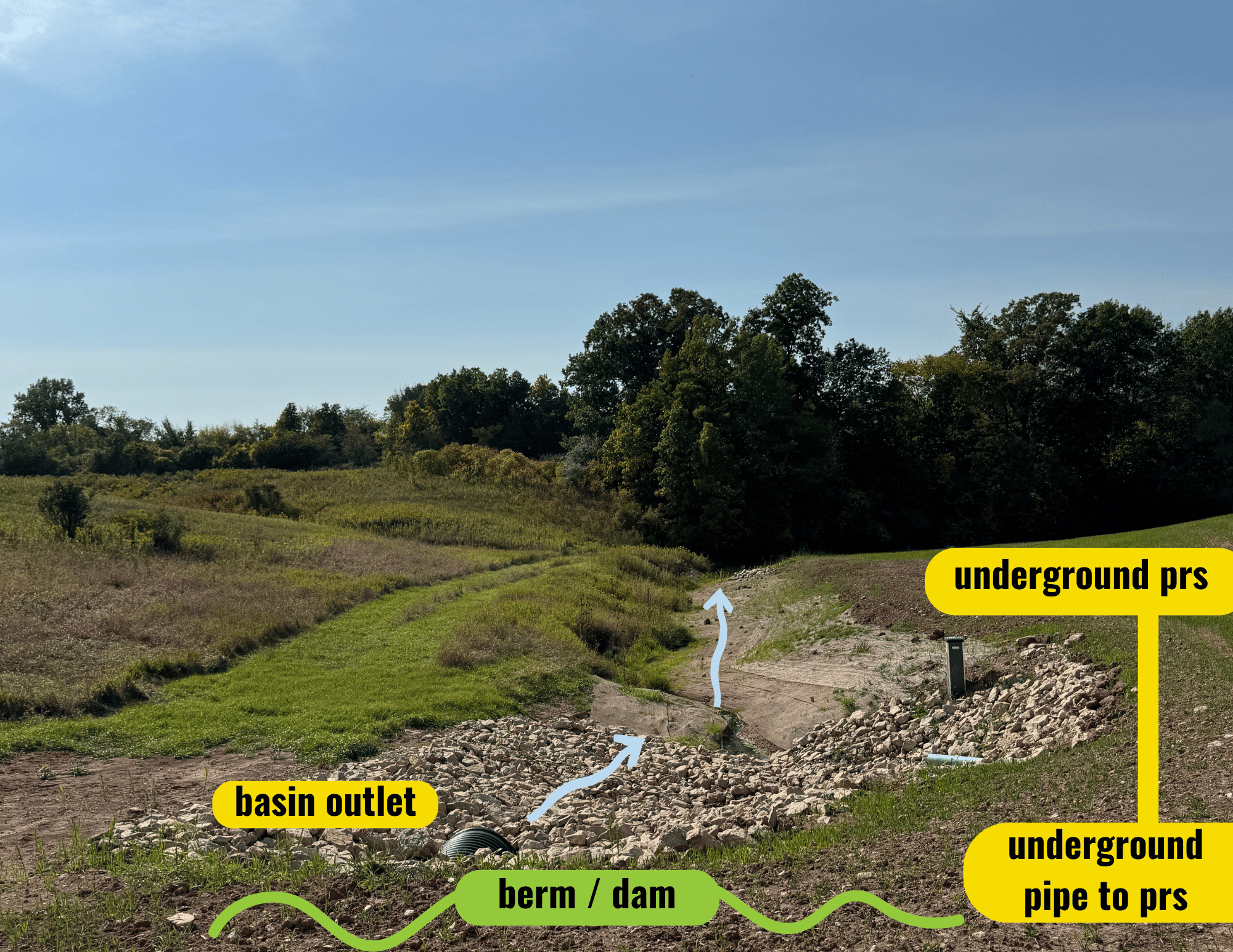
Water is discharged from the basin via the basin outlet or the underground piping to the PRS system, which is also buried underground. Additional spillway space is built into the system on the benches to the right and left of the outlet, allowing for space during times of unusually high flow.
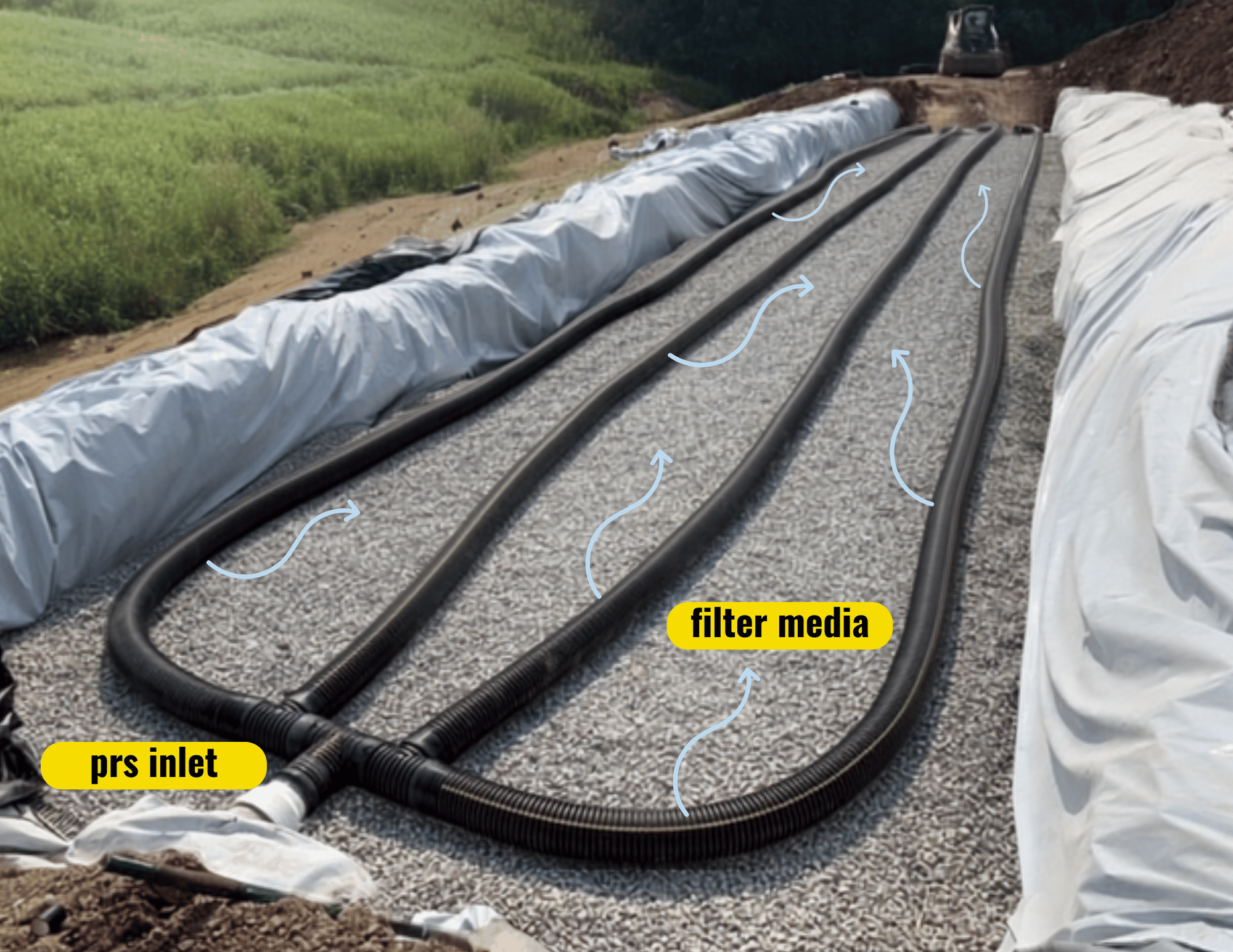
The PRS is not visible to the naked eye – it is constructed in a underground trench and is filled with the filter media, a combination of pea gravel and steel turnings. Phosphorus binds to the steel turnings as they rust, preventing it from continuing through the system. Water is distributed evenly throughout the trench via a tile manifold system (black tubing), ensuring that all the water makes contact with the filter media. The PRS will continue to function for many years to come! When models or water quality samples show that phosphorus is not longer being bound at the desired rate, the trench can be reopened and the filter media replaced, ensuring a system that will stand the test of time.
After treatment, the water is discharged from the PRS at a controlled rate.