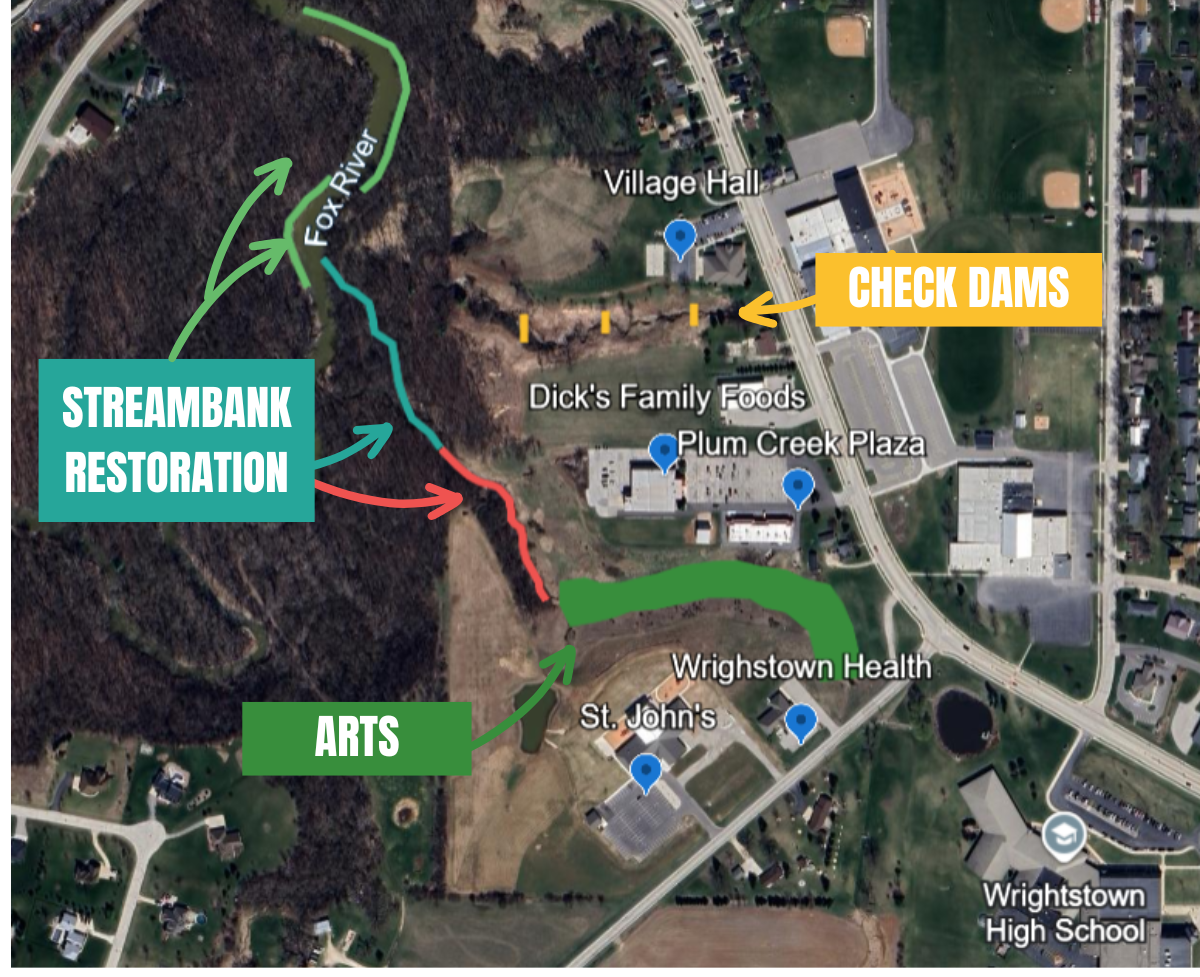
Let’s focus in on Plum Creek!
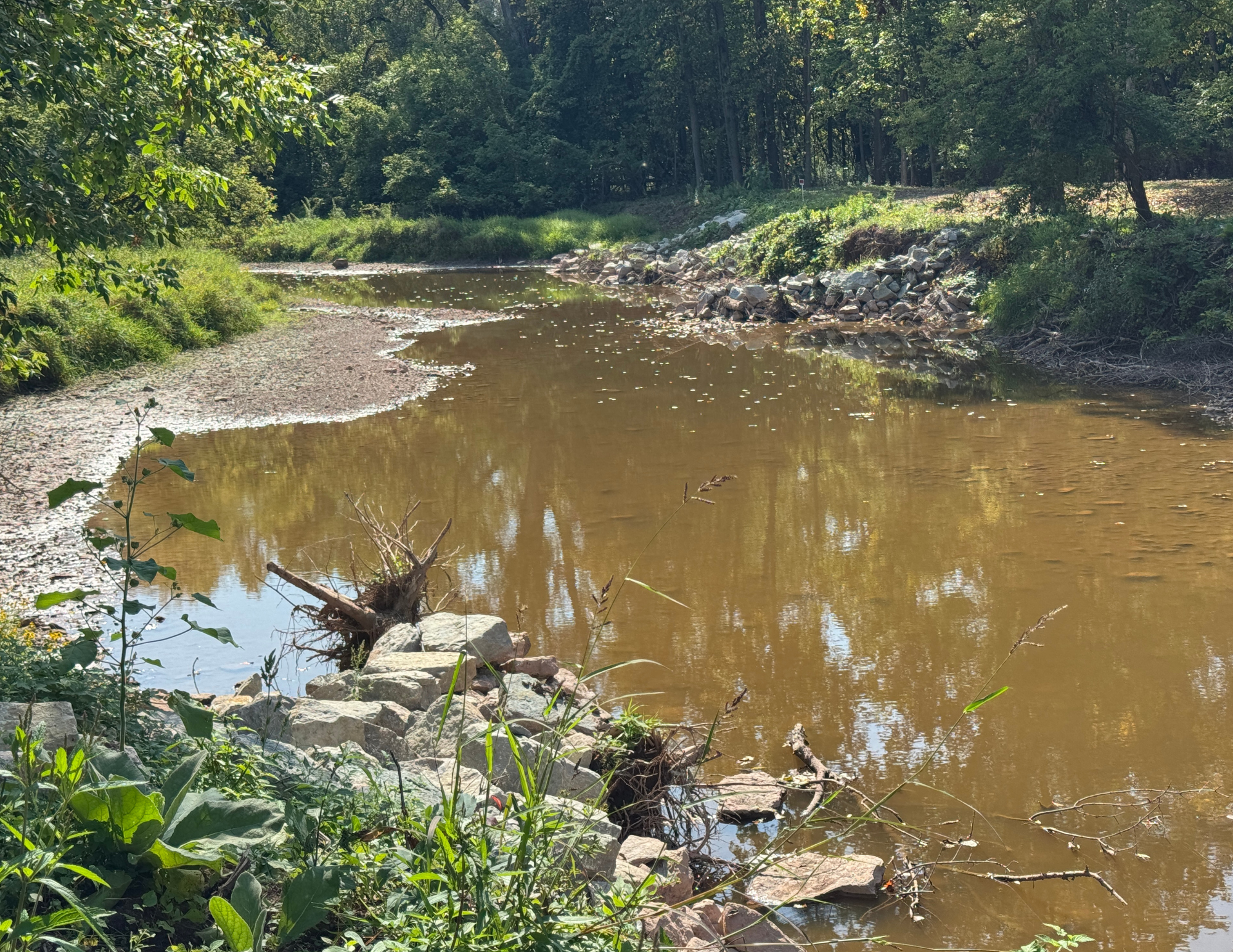
Plum Creek (the area outlined in bright green on the map) is well known in the Wrightstown community as a source of recreation but also as a “chocolate milk” stream that creates sediment plumes in the Fox River.
For this project, our goal was to slow the water coming in to Plum Creek from upstream and address the streambank erosion occurring in the lower reaches of the creek near where it meets the Fox River. The ARTS constructed upstream of Plum Creek In Wrightstown captures runoff, settles sediment, and slows the water coming downstream. This allows the water to enter Plum Creek at this location at a controlled rate, preventing rushing water from eroding banks.
While this project does not address all sources of sediment in the system, enough work has been done upstream to allow for restoration activity to begin. In partnership with the Village of Wrightstown, a trail is being constructed to run along Plum Creek and adjacent to the ARTS, connecting the downtown district and river with the schools and neighborhoods. This trail will allow community members to access a site that was historically overgrown and inaccessible. By creating a space for community members to access their local stream, it will build support for future work to continue the progress made to date in the Plum Creek watershed.
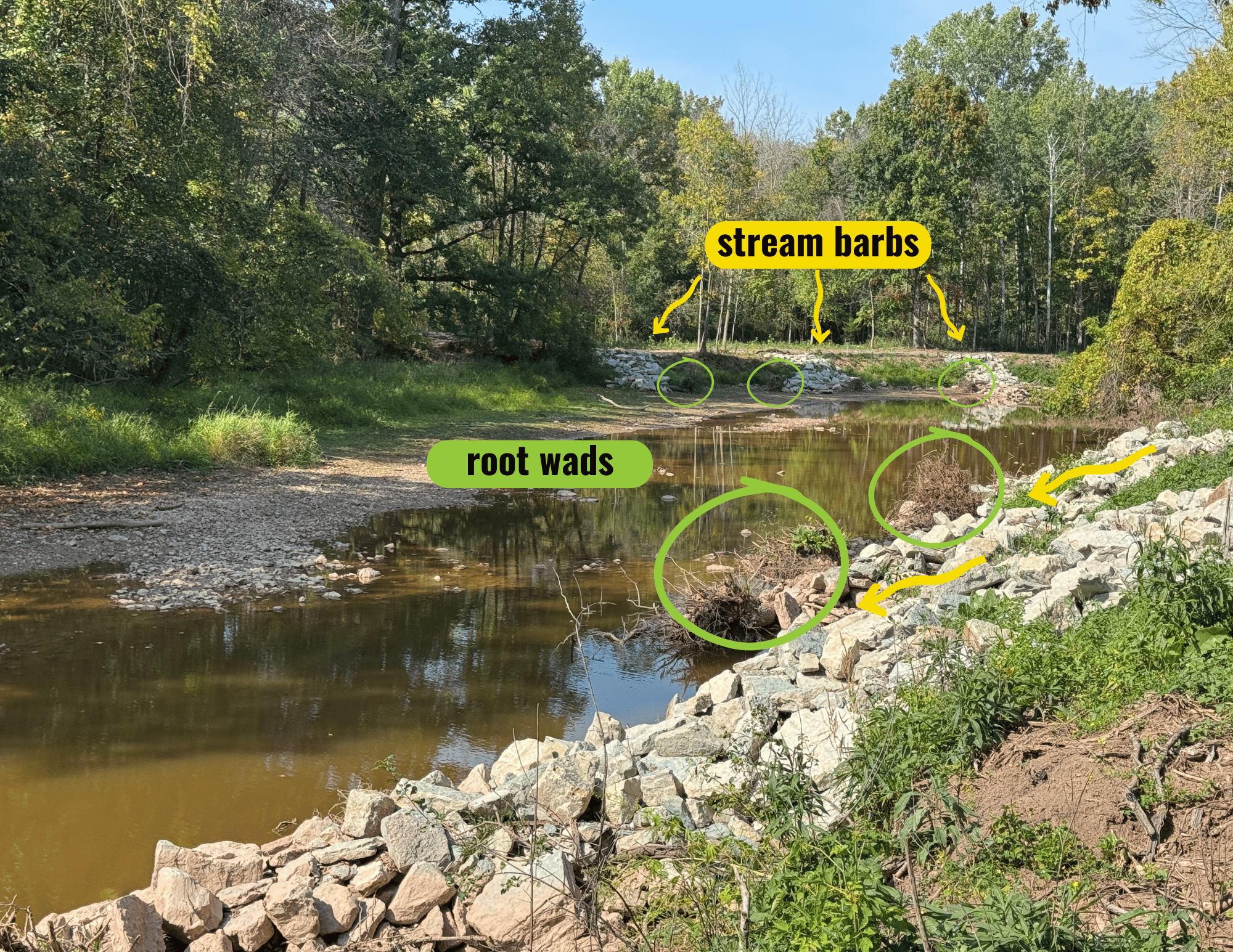
The restoration on Plum Creek consisted of a simple, yet innovative technique called stream barbs or bendaway weirs. Along 1.2 miles of stream, streambarbs were installed to protect the banks.
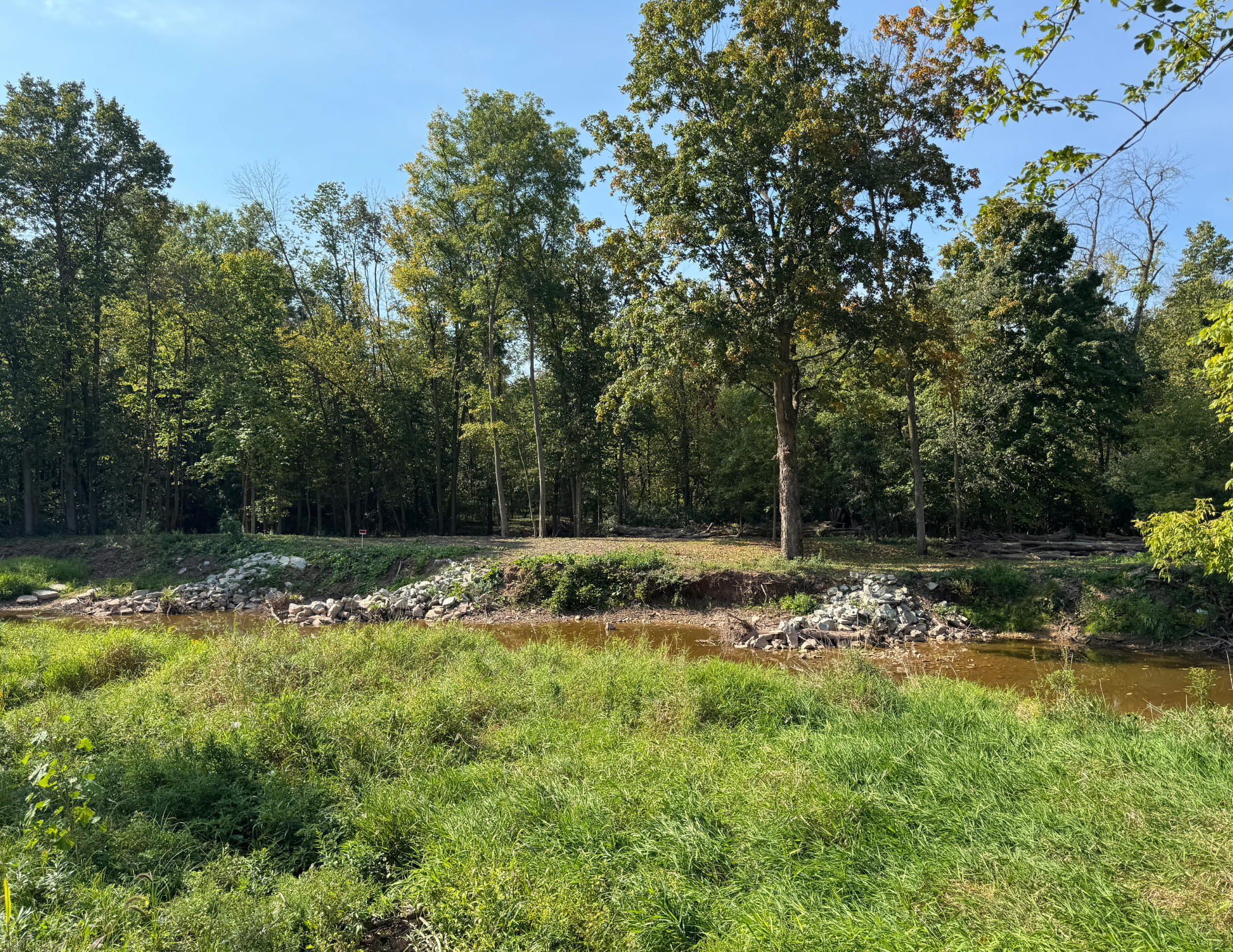
Buckthorn and underbrush was selectively cleared on the top of the banks and the understory was cut back using a Fecon unit, which ground up the smaller trees into a mulch that was spread back over the project site at the end of construction to temporarily prevent erosion while vegetation established. To build the stream barbs, heavy rock riprap was brought down the access road. The rock was then placed in the stream in order to deflect the moving water back towards the center and away from the highly erodible streambanks. Trees were also placed within the rock to promote fish habitat.
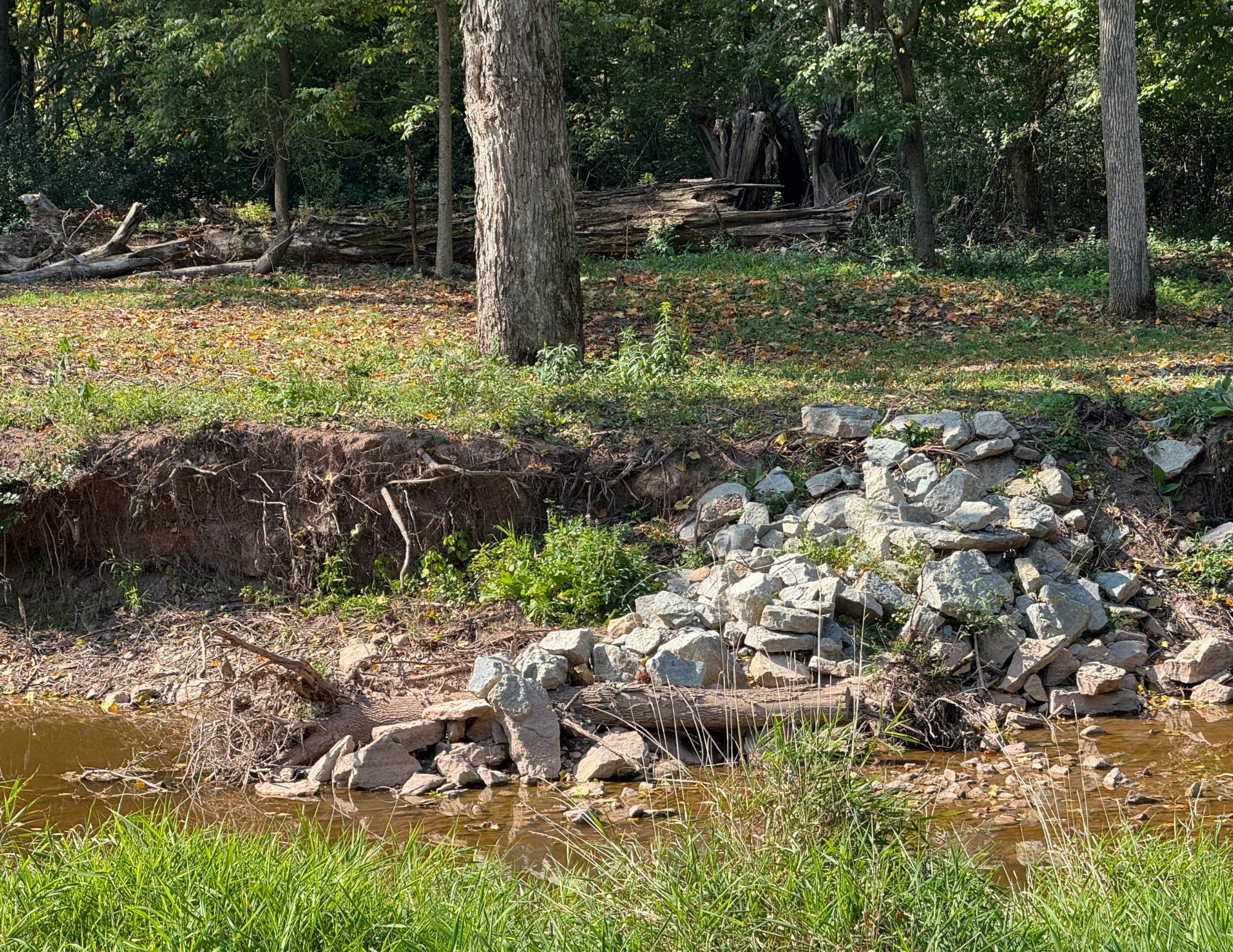
Streambarbs keep the baseflow stream flow in center of stream and away from the erosion-prone outside bends of the streambanks. After storm events, when the stream rises, the bendway weirs are pointed upstream in a way to redirect quickly moving water back to the center of the stream. The area behind the barbs becomes locations where sediment will fall out as well. The gradual process of sediment building up behind the barbs will create a narrower creek path, returning it closer to it’s natural state and encouraging a system where water flows rather than stagnating.