
Valentine’s Day is all about the people we care about. Significant others, our kids, our friends, and the neighbors who shovel their sidewalk early and often so the salt can stay in the bag. It’s also not a bad day to appreciate the places we care about, too.
The lake where you watch the sunset together, the path lined with wildflowers on your favorite walks, and the spot where you end up just sitting and talking for hours all depend on healthy land and water. Taking small steps to care for them is one way to send a Valentine back to the places you love.

There’s the yard, and then there’s the yard you fall in love with.
One is short grass and a lot of mowing. The other is where you walk hand in hand past purple coneflowers and milkweed, with grasses moving in the breeze and butterflies doing loops over the flowers.
Native plants earn those butterflies. Their deep roots hold soil in place and soak up rain so it doesn’t rush straight to the street. Up top, they’re feeding and sheltering pollinators that can’t use just any plant.
More native plants mean more color, more life, and less polluted runoff heading for local rivers and lakes. That’s a pretty good trade for a little less turf!

Clean water shows up in a lot of the days you remember.
Dipping your toes off the end of a dock. Gliding a canoe across a quiet bay. Standing in a clear creek, feeling the current around your ankles while you talk. Watching ducks and geese along the shoreline.
All of that depends on what’s happening up on the land. Leaves and grass clippings left in the street, extra fertilizer on lawns and fields, loose soil, and stray litter do not stay put. Rain and melting snow carry them to the nearest ditch, storm drain, or stream, then on to rivers and lakes.
When we keep more of that mess out of the way, the water stays clearer and healthier for fish, frogs, birds, and everyone who loves to paddle, swim, or just sit and watch the current flow in.
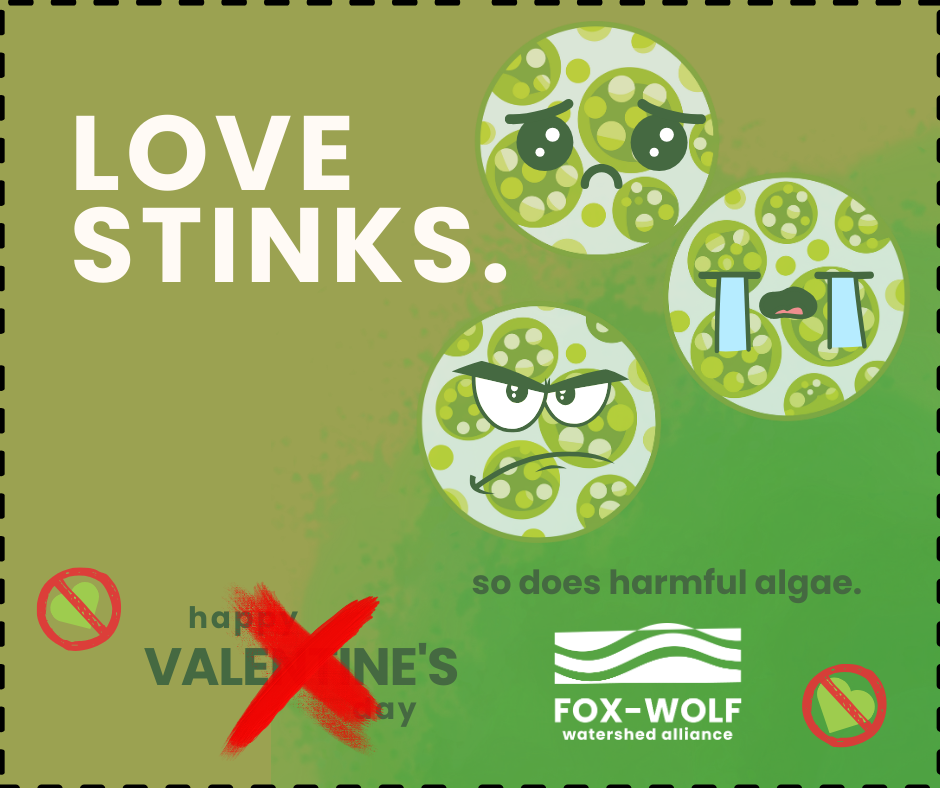
If you’ve ever walked down to the shore and gotten hit with a wall of “oh no,” you’ve met a harmful algae bloom (HAB).
Thick green scums love extra nutrients in the water. Phosphorus and nitrogen from lawn fertilizer, pet waste, bare soil, and leaves and grass clippings sitting in the gutter are all on the menu. Rain and snowmelt do the delivery.
The fixes aren’t fancy but they’re effective:
-
Scoop the poop.
-
Keep leaves and clippings out of the street.
-
Go lighter on lawn fertilizer or skip it altogether.
Less “food” in the water means fewer smelly surprises at the beach and more days when the lake smells like summer instead of science experiment.

In the love story between land and water, healthy soil is what holds them together.
Good soil feels springy, not rock-hard. It soaks up rain, holds onto nutrients, and lets roots work their way through. When storms roll through, water disappears into it instead of racing away in muddy sheets.
You find soil like that under cover crops, in fields and pastures with lots of roots, in gardens with compost, and in yards where bare ground does not stay bare for long.
When soil is in good shape, nearby ditches, streams, and rivers see less erosion, less fertilizer washing off, and gentler flows after big rains. The ground and the water win at the same time.

Stormwater is what happens when rain or snowmelt never gets the chance to sink in and stay awhile.
It runs off the roof where you watch storms roll in, the driveway where you park before a night out, the parking lot outside your favorite restaurant, and the streets you use to get there, all heading downhill toward the nearest storm drain. On the way, it collects whatever is on the surface: road salt, oil drips, litter, leaves, grass clippings, bits of soil.
Most storm drains lead straight to creeks, rivers, and lakes. No detour, no filter.
The good news: water is easy to help if it’s given somewhere softer to land. A downspout pointed into a yard or garden instead of the driveway. A rain garden in a low spot. More trees and native plants. Pervious pavement where it makes sense.
Every bit of stormwater that can soak in instead of rush off brings less mess to the rivers and lakes that make so many of your favorite moments possible.

Zebra mussels take “clingy” to a whole new level.
They attach to rocks, docks, boat lifts, water intake pipes, and even native mussels. Once they show up in a lake or river, they spread fast and are very hard to remove. They crowd out native species, change how food moves through the system, and leave sharp shells along shorelines.
They usually arrive as hitchhikers. A few mussels (or their microscopic young) ride in on a boat hull, trailer, anchor, or in leftover water in a livewell.
A quick routine at the landing really helps:
-
Pull off any plants or mud.
-
Drain water from the boat, motor, and livewells.
-
Let gear dry before visiting a new lake or river.
It’s a small bit of effort that keeps the “stuck on you” feeling where it belongs: with people, not invasive species.
Valentine’s Day comes with cards, hearts, and one date circled on the calendar, but it’s still just a single day in the year. The real love story is all the small choices we stack up the rest of the time. Every time you plant native flowers, scoop the poop, clear a storm drain, or clean and dry a boat, you’re making it a little easier for lakes to stay clear, creeks to handle big storms, and shorelines to feel like the places you actually want to spend time.
None of it looks huge from the outside. But added up across driveways, yards, farms, parks, and boat landings all over the Fox-Wolf Watershed, it’s the kind of steady, everyday care that keeps this place worth falling in love with again and again.
💙 Happy Valentine’s Day from your friends at Fox-Wolf 💙
For more watershed Valentines, you can still browse last year’s set here.