
Zebra mussels, quagga mussels, and…Golden mussels? New invasive mussel seen in California
You may have heard about a mussel discovered in California’s Sacramento-San Joquin Delta in October 2024. The Golden Mussel (Limnoperna fortunei) is an 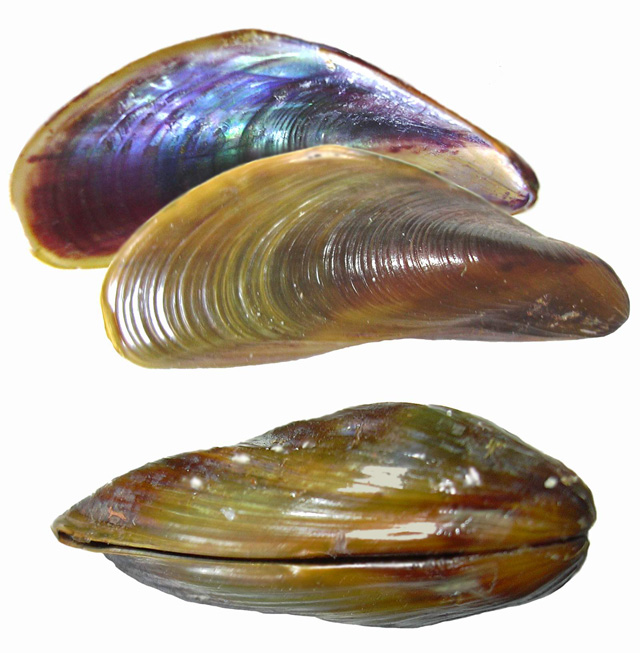 invasive, freshwater bivalve that is similar to the Zebra mussel and Quagga mussel. Similar to these other mussels, the Golden mussel threatens lake ecology, infrastructure, and water quality.
At the moment, the California finding of the Golden mussel is the first North American detection of the species. It is believed that the Golden mussel reach California via international shipping. Originally from China, Thailand, Korea, Laos, Vietnam, Indonesia, and Cambodia, Golden mussels have since invaded other countries including Japan, Argentina, Uruguay, Bolivia, and Hong Kong. 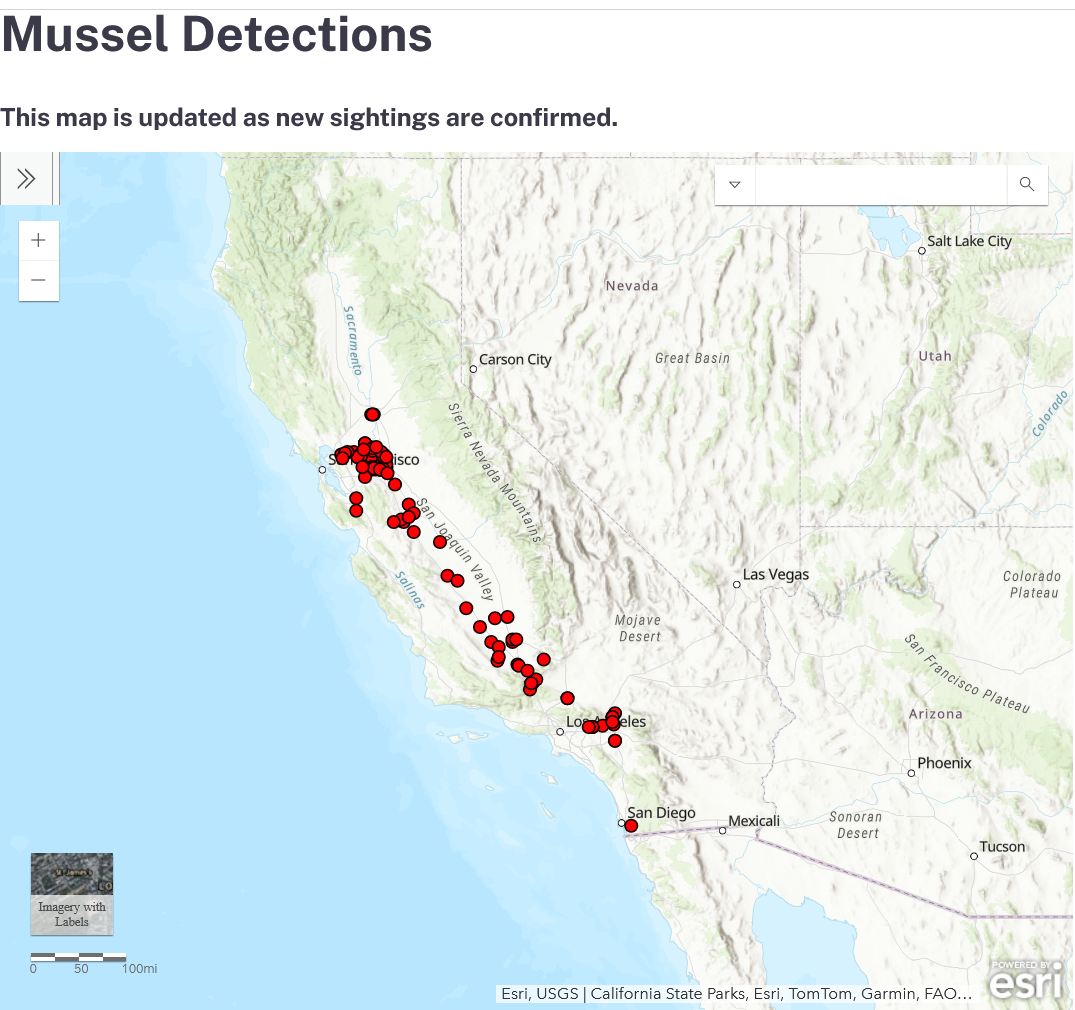
Golden mussels get their name from their color which ranges from dark brown to gold. Similar to Zebra and Quagga mussels, Golden mussels spawn multiple times each year, attach to hard surfaces through byssal threads, and produce thousands of small offspring every year. These Golden mussels are filter feeders, eating algae in the water. However, they don’t eat all types of algae and will not eat blue-green algae. AS we’ve seen with zebra and quagga mussels, Golden mussels colonize hard surfaces and can impede water flow, clog pipes, impact watercraft motors, and have sharp shells that can injure humans.
So if they’re so similar, what’s the issue?
Golden mussels tolerate a much wider range of temperatures, salinity, and brackish water environments compared to both Zebra and Quagga mussels. As such, 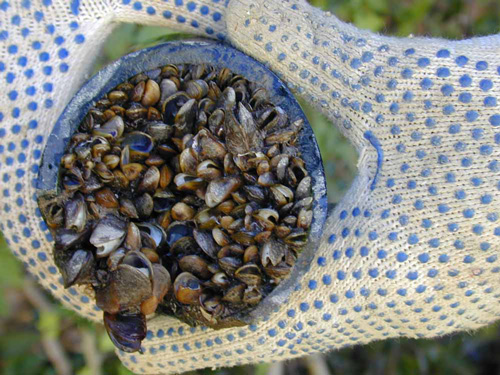 Golden mussels can colonize a broader range of habitats. Most significantly, Golden mussels have a significantly lower calcium requirement. So in lakes that have soft water where Zebra and Quagga mussels can’t live, the Golden mussel could thrive.
Think of it this way. Imagine the impacts that we’re facing from Zebra and Quagga mussels in Northeast Wisconsin. But a new invasive mussel could live in many more types of lakes and grow in more dense colonies.
What can we do?
You’re already doing it! We can stay ahead of this mussel’s spread simply by:
* Inspect boats, trailers, push poles, anchors, and other equipment for attached aquatic plants or animals.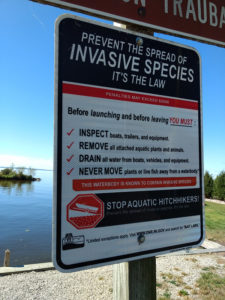
* Remove all attached plants or animals
* Drain all water from boats, motors, livewells and other equipment
* Never move live fish away from a waterbody
* Never release aquarium plants or animals into your local waterways
Simple actions result in significant prevention. Protect our lakes!
Photo Credit: Alberta Invasive Species Council, Wikipedia Commons, CA Department of Fish and Wildlife, Chris Acy
Questions? Comments? Contact Chris Acy, the AIS Coordinator covering Brown, Outagamie, Fond du Lac, Calumet, and Winnebago Counties at (920) 460-3674 or chris@fwwa.org!
Follow the Fox Wolf Watershed Alliance on our Fox-Wolf Watershed Alliance Facebook page or @fox_wolf_watershed_alliance on Instagram! You can also sign-up for email updates at fwwa.org.
The Fox-Wolf Watershed Alliance is an independent nonprofit organization that identifies and advocates effective policies and actions that protect, restore, and sustain water resources in the Fox-Wolf River Basin.
Reporting invasive species is a first step in containing their spread. Maintaining and restoring our waters and landscapes can reduce the impacts even when we don’t have other management options to an invasive species.
